
The quest for maximum responsiveness in competitive PC gaming knows no respite. Now SCUF Gaming, the high-performance controller brand of the Corsair family, has chosen to bring an 8000 Hz polling rate to a traditional gamepad too. The new Nemesis Pro 8K is a significant step forward for those who don't want to give up the pad but demand the precision typical of professional peripherals: two models, one wired and one wireless, with a target response time of under 1 millisecond.
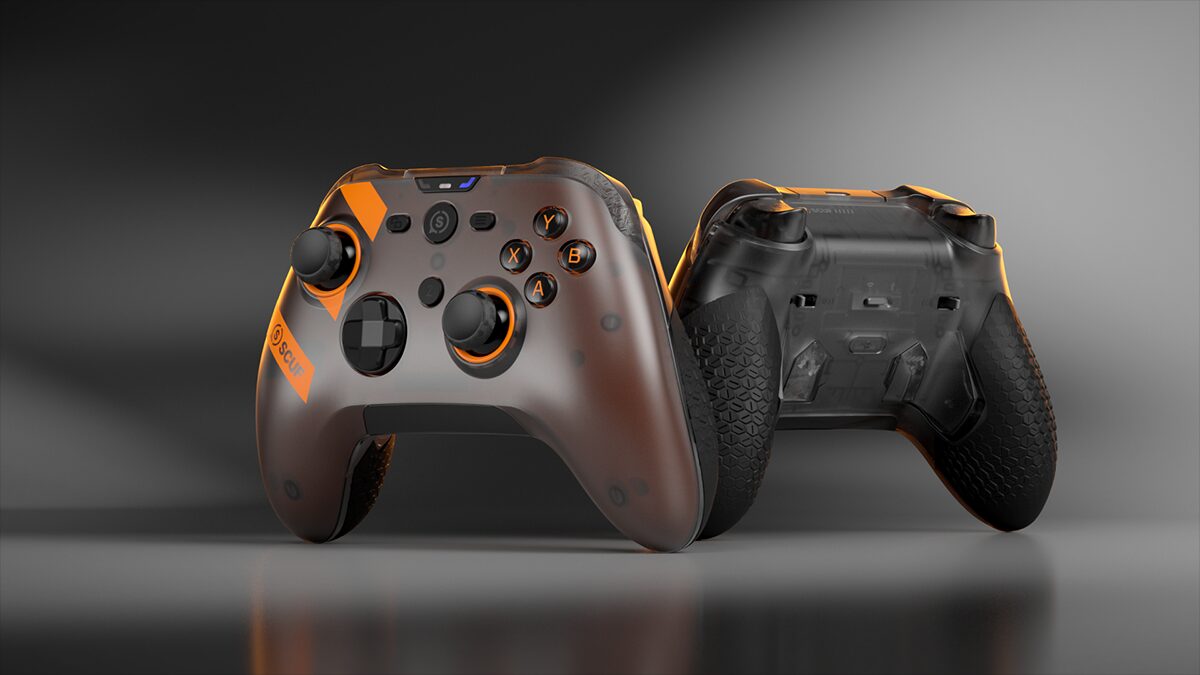
Specs that make the difference in competition
The first thing that catches the eye is the 8000 Hz polling rate itself, a figure that until now was the preserve of keyboards and high-end gaming mice. On a controller, it means a real change in response times: every millisecond counts when you play battle royales or competitive shooters.
The sticks use TMR (tunnel magnetoresistance) technology, a solution that replaces traditional contact potentiometers. The practical difference is twofold: they stand up better to wear over time and, above all, they significantly reduce the risk of stick drift, that annoying problem where the stick registers movement even when you aren't touching it. It is not an absolute magic fix, but it is a technological step forward compared with many competing solutions in the same price range.
The ABXY buttons are mechanical, in the style of gaming keyboards: each press offers sharp tactile feedback and a defined travel. For those used to the rubber buttons of traditional controllers, the feel is markedly different — some will appreciate it, others may find it unusual at first.
The four rear paddles are built into the design, but the two inner ones are removable. This lets anyone who prefers a simpler setup reduce the number of controls to four, without having to make structural compromises. The triggers, meanwhile, can switch between a short, instant travel (ideal for shooters) and a full analogue travel (better for driving sims). Configuration is done through a dedicated Windows app, where you can remap buttons, adjust response curves and dead zones, and save custom profiles for different games.
Connectivity, prices and the choice between wired and wireless
SCUF offers two variants. The Nemesis Pro 8K Wireless keeps the maximum polling rate both in 2.4 GHz wireless mode and when connected over USB-C. The Nemesis Pro 8K Wired offers the same performance, but only via cable. Both are compatible with Windows 10 and Windows 11.
Prices start at €134.99 for the wired model and €219.99 for the wireless version. That is a significant sum for a controller: we are talking about a premium tier, reserved for those who make no compromises on responsiveness. Pre-orders are already open at SCUF Gaming and through selected retailers.
According to Tobias Brinkmann, Vice President and General Manager of Gaming Peripherals at Corsair: "The Nemesis Pro 8K family for PC offers next-generation controllers, with the speed, precision and customisation that competitive players need to realise their full potential." A statement that underlines the explicit target: not the casual gamer, but those who compete seriously.
The real paradigm shift: when you actually need it
Here we come to the critical point. A premium controller at €220 is a conscious, niche choice. It is not a purchase for everyone who plays on PC with a pad. Its practical usefulness would emerge in very specific contexts: competitive players in titles where response time is measured in milliseconds (tactical shooters, battle royales, fighting games).
The benefit of TMR technology on the sticks is real, especially over time: anyone who has suffered stick drift on traditional controllers over hundreds of hours of play knows exactly how annoying it is. The mechanical robustness of the Nemesis Pro 8K tackles the problem at the source, not downstream. Likewise, the high polling rate is measurable and relevant, but only if used over a stable wireless connection.
The market for premium PC controllers is at an interesting stage. In recent years, more and more players have discovered that using a pad on PC is not a matter of convenience, but can be as competitive as mouse and keyboard, if backed by the right peripherals. SCUF has correctly identified a space where technical specs are often underestimated by traditional manufacturers. The real question, over the next 6-12 months, will be whether this product tier can attract a customer base large enough to go beyond the most demanding enthusiasts — or whether it will remain the choice of professionals and the truly competitive.
Frequently asked questions
What is the difference between the wireless and the wired model?
Both keep the maximum polling rate of 8000 Hz. The wireless model offers freedom of movement via a 2.4 GHz or USB-C connection, while the wired one guarantees zero latency but with the constraint of the cable. The choice depends on your personal preferences and the stability of your wireless network.
Is the SCUF Nemesis Pro 8K compatible with consoles?
The article specifies compatibility only with Windows 10 and Windows 11. These controllers were explicitly designed for competitive PC gaming, not for consoles.
How much does the SCUF Nemesis Pro 8K cost in Italy?
The wired model costs €134.99, while the wireless starts at €219.99. Pre-orders are available at SCUF Gaming and selected retailers; the prices are the same as the official list.
Source: SmartWorld.it
Translated from the Italian original. Read in Italian


