CD Projekt Red has surprised fans with a double announcement: The Witcher 3 Remastered will arrive on 29 September as a free upgrade for everyone who owns the game, while the long-awaited Songs of the Past expansion finally emerges from silence too, shown for the first time in an official trailer. The news marks a pivotal moment for one of the masterpieces of 2015, eleven years after its debut, and repositions CD Projekt Red's title in the contemporary gaming landscape with a strategy rarely seen in this industry.
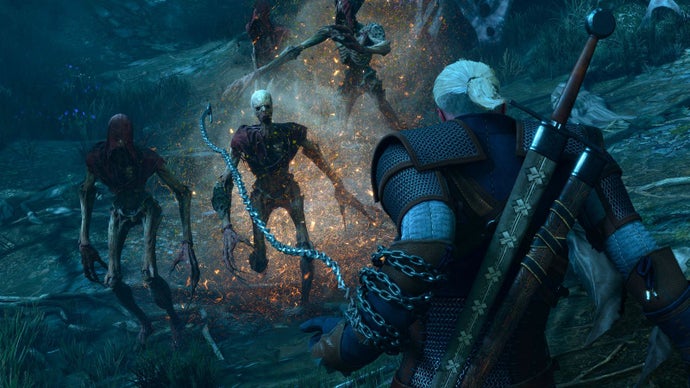
In an industry where remasters are often separate commercial offerings, frequently at full price, CD Projekt Red's decision to offer the upgrade for free is unusual and significant. For anyone who already owns The Witcher 3 on any platform, the Remastered will automatically be available at no extra cost. This is not a simple cosmetic reskin: the company has chosen to carry out a substantial overhaul of the original production, taking advantage of the technical potential of current platforms. The choice reflects a deep strategic awareness: The Witcher 3 has sold millions of copies over the course of the decade and its community remains remarkably active, with players still exploring Geralt of Rivia's world and discovering details that remain hidden.
What exactly "Remastered" means in the context of The Witcher 3 remains one of the most eagerly awaited details. In 2026, the term is no longer synonymous with a simple graphical touch-up: it denotes a comprehensive revision touching the graphics engine, the user interface, the game systems and potentially the handling of AI. CD Projekt Red has built up experience with the Cyberpunk 2077 updates and knows how to bring back an established title without distorting it. The Witcher 3 Remastered is therefore an interesting experiment: how to bring an already immortal work back to life, widening its accessibility without betraying its essence.
The Songs of the Past expansion is the most important narrative content announced for the franchise since the base game launched. After years of waiting, the studio has finally decided to reveal what it was preparing for Andrzej Sapkowski's universe. The very title, "Songs of the Past", suggests an exploration of the past of The Witcher's world, probably diving into historical periods or characters that the main game only hinted at, perhaps exploring the legends and myths that shaped the continent.
One of the most interesting revelations concerns the distribution platforms: the Remastered will debut at the same time on Nintendo Switch 2 for the first time, marking one of the most anticipated moments for this new console. Nintendo Switch 2, still early in its commercial life, has received several announcements of big titles from major developers, and the arrival of The Witcher 3 Remastered symbolises a milestone. At the same time, CD Projekt Red has decided to bring the game to Battle.net as well, Blizzard Entertainment's platform, multiplying the distribution channels available to players and offering alternatives to the traditional PC and console platforms. This multi-platform strategy shows how the big studios want to maximise the reach of their titles.
Looking at the broader strategic picture, this announcement places The Witcher 3 in a central position in CD Projekt Red's portfolio. While The Witcher 4 is still in development with plans stretching into the future, the Remastered keeps attention on the franchise and gives fans something new to discover in an already familiar world. A remaster is never merely a technical exercise: it is also a narrative gesture that says "this universe still matters to us, and we want it to keep mattering to you". It is a move that serves to consolidate the player base while they wait for the new projects.
Tying the free upgrade to the Remastered sends an important message: CD Projekt Red believes in the quality of the overhaul enough not to offer it as a separate paid product. In an industry dominated by ever more aggressive monetisation strategies, this decision stands in sharp contrast and expresses genuine confidence in its own work. Longtime players of The Witcher 3 — those who have invested dozens of hours in Geralt of Rivia's world and have completed the Blood and Wine and Hearts of Stone DLCs — will be rewarded for their loyalty to the franchise, rather than punished with an additional paywall.
From a technical standpoint, the Remastered will have to face an interesting challenge: how to modernise a 2015 game for consoles and operating systems that today have radically different computing power, without losing the experience fans remember. PC players with powerful hardware and console players — from owners of PlayStation 5 to new Switch 2 buyers — will have different expectations. CD Projekt Red will have had to balance graphical ambition with accessibility, quality with performance. The Remastered will therefore be a window onto the studio's vision of how masterpieces can evolve.
29 September will be a critical moment: eleven years after the original launch, the gaming world will find out whether a Remastered can truly reinvigorate an established and deeply loved work, or whether even a modernised and expanded edition of a classic can still surprise those who have already explored every corner of Novigrad and the wilds. The community was waiting for concrete answers, and at last it has a date to circle on the calendar. But what fascinates you more: returning to Geralt's shoes in a renewed guise, or the long-awaited discovery of what Songs of the Past really contains?
Reprinted from: Eurogamer
Translated from the Italian original. Read in Italian