Book-style foldables have always carried the same compromises: too heavy, with a narrow, awkward outer screen, and that crease down the middle always there in plain sight. With the Find N6, OPPO raises the bar decisively. This is not the usual incremental update: it is a foldable that tries to eliminate the category's historic flaws, getting as close as possible to a traditional phone while packing in the best hardware available.
Unveiled in March and officially sold only in some Asian markets and Oceania, it never reached Europe. I used it for weeks as my main phone, in the Global version with Google services, opening and closing it dozens of times a day. Here is how it went.
Availability: Global 16/512 GB version not officially distributed in Italy, available through import at around €1,700.
What changes compared with the Find N5
The thickness stays the same, already a record, as on last year's model. OPPO has worked on everything else:
- The crease: the new hinge and an ultra-thin glass that "self-levels" reduce the step in the inner screen to about 0.05 mm. It is the most noticeable novelty.
- Main camera: it goes from 50 to 200 MP, on the same 1/1.56" sensor. The ultra-wide is new too, at 50 MP and with autofocus.
- Battery: up to 6000 mAh (it was 5600), still silicon-carbon.
- Weight: down a little, from 229 to 225 grams.
- Stylus: support for the OPPO AI Pen arrives on both screens.
- Processor: Snapdragon 8 Elite Gen 5 in place of the Snapdragon 8 Elite.
Spec sheet
| Size and weight | Closed 159.9 × 74.1 × 8.93 mm; open 159.9 × 145.6 × 4.21 mm; 225 g |
|---|---|
| Materials | 7000-series aluminium frame, second-generation Titanium Flexion hinge |
| Inner display | 8.12" foldable LTPO OLED, 2480 × 2248 pixels, 1-120 Hz, claimed peak 2500 nits, 2160 Hz PWM |
| Outer display | 6.62" OLED, 2616 × 1140 pixels, 1-120 Hz, 2160 Hz PWM |
| Processor | Qualcomm Snapdragon 8 Elite Gen 5 (3 nm), Adreno 840 GPU |
| Memory | 16 GB LPDDR5X, 512 GB UFS 4.1, not expandable |
| Rear cameras | Main 200 MP 1/1.56" f/1.8 with OIS; ultra-wide 50 MP f/2.0 with autofocus; periscope telephoto 50 MP f/2.7 with OIS (3x optical); 2 MP monochrome sensor; True Colour spectral sensor; Hasselblad tuning |
| Video | 4K at 60 fps Dolby Vision from all cameras, 4K at 120 fps from the main camera |
| Front cameras | 20 MP on both the inner and the outer screen |
| Battery | 6000 mAh (typical), silicon-carbon |
| Charging | 80 W SUPERVOOC wired, 50 W AIRVOOC wireless, reverse wireless charging |
| Connectivity | 5G, Wi-Fi 7, NFC, dual SIM + eSIM, USB-C 3.1 with video output, infrared |
| Protection | IP56, IP58 and IP59 |
| Unlocking | Fingerprint reader in the power button |
| Software | ColorOS 16 (Android 16), upgradable to ColorOS 17; six years of security patches |
| Colours | Stellar Titanium, Blossom Orange |
| Indicative price | about €1,700 (Global 16/512 GB, import) |
Design and ergonomics: as thin as a normal phone
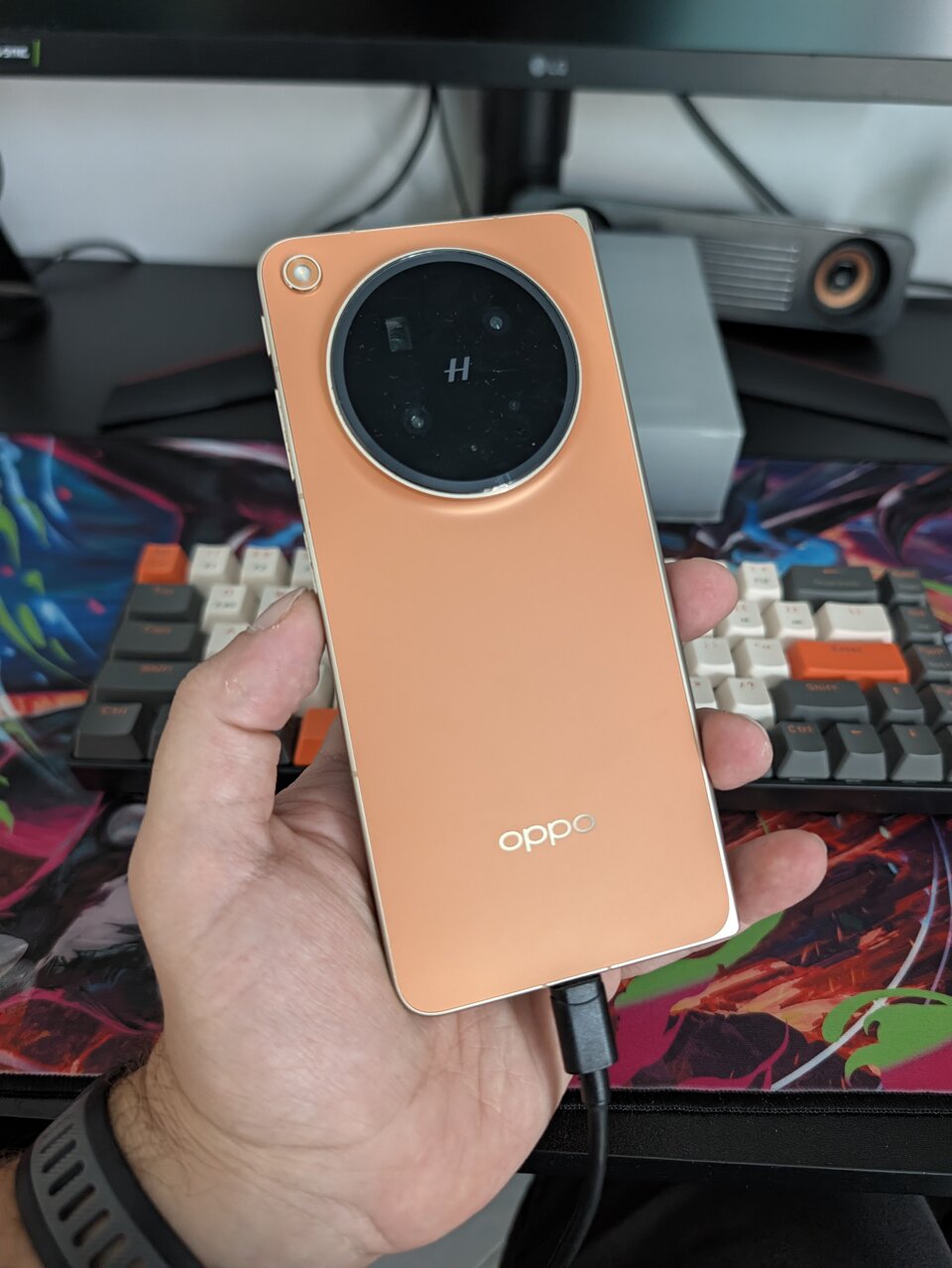
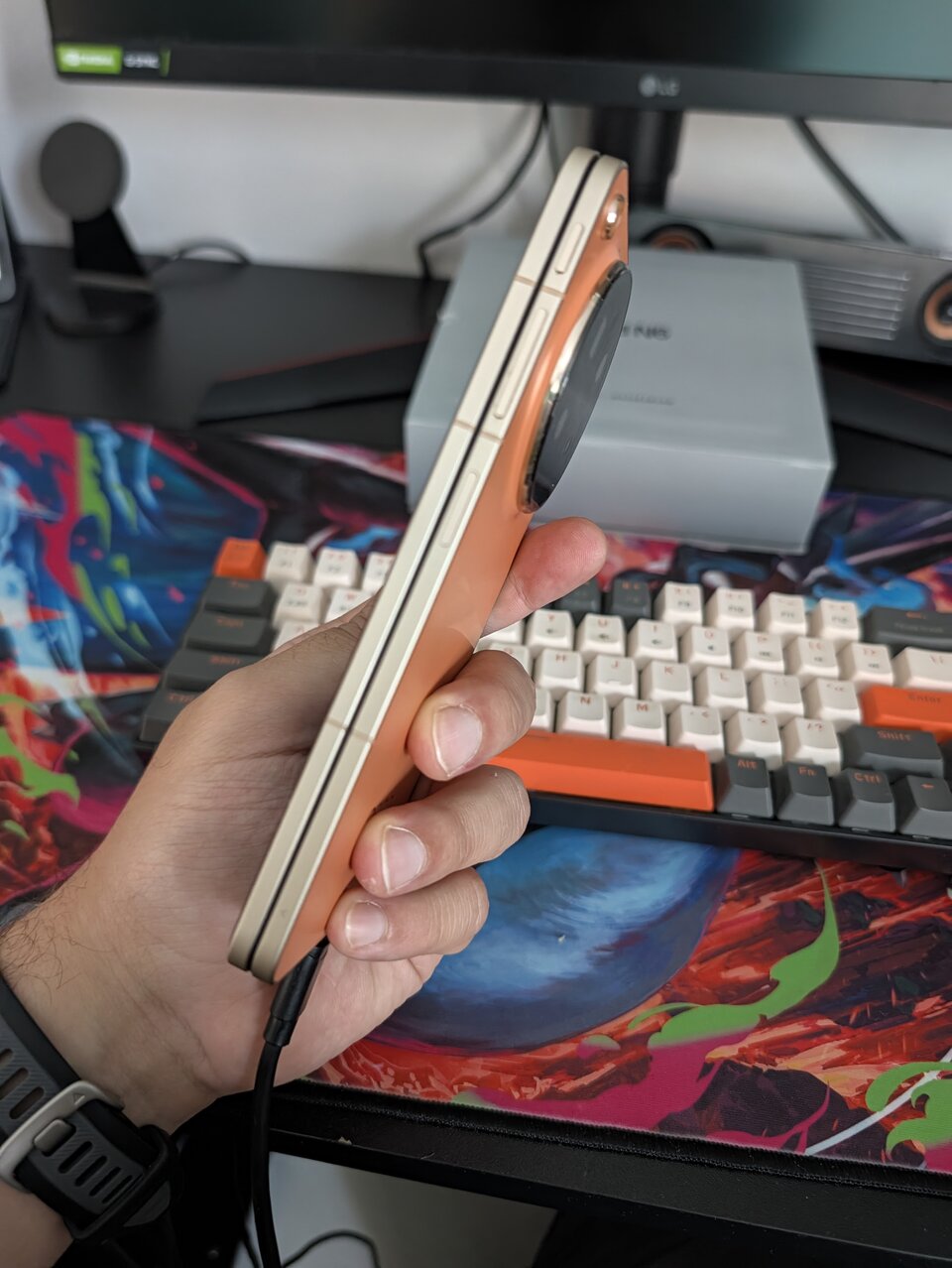
The real magic of the Find N6 lies in its dimensions and how it feels in the hand. Closed, it is 8.93 mm thick and weighs 225 grams: figures now very close to those of an ordinary "slab" smartphone. You can hold it for a long time without tiring your wrist, and the 6.62-inch outer screen has normal proportions, with no adjustment period at all. Open, the thickness drops to 4.21 mm: about the same as the USB-C port.
The hinge is a small engineering masterpiece. It is the second-generation Titanium Flexion, made of titanium and guaranteed by OPPO for a million openings. Having also tried the Galaxy Z Fold 8 line, I can say it with certainty: OPPO has taken a clear step forward. The crease is there, and physically it still can't disappear entirely, but it has been optimised to the point that at times you forget it exists while browsing or watching a video on the inner screen. You only find it by looking for it: in raking light, or by running a finger firmly across it. The hinge also holds intermediate positions well, handy for propping the phone on a table for a video call.
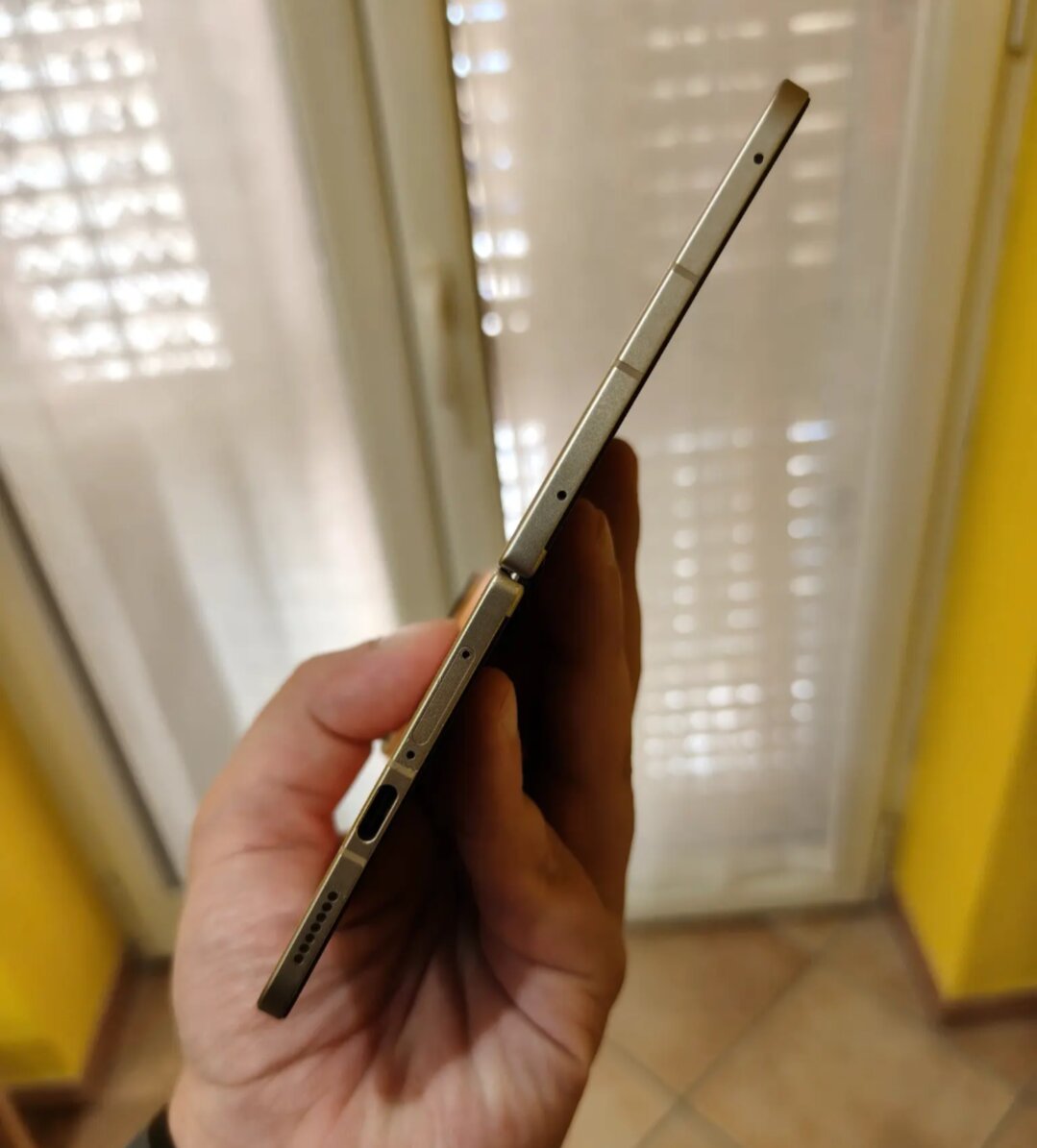
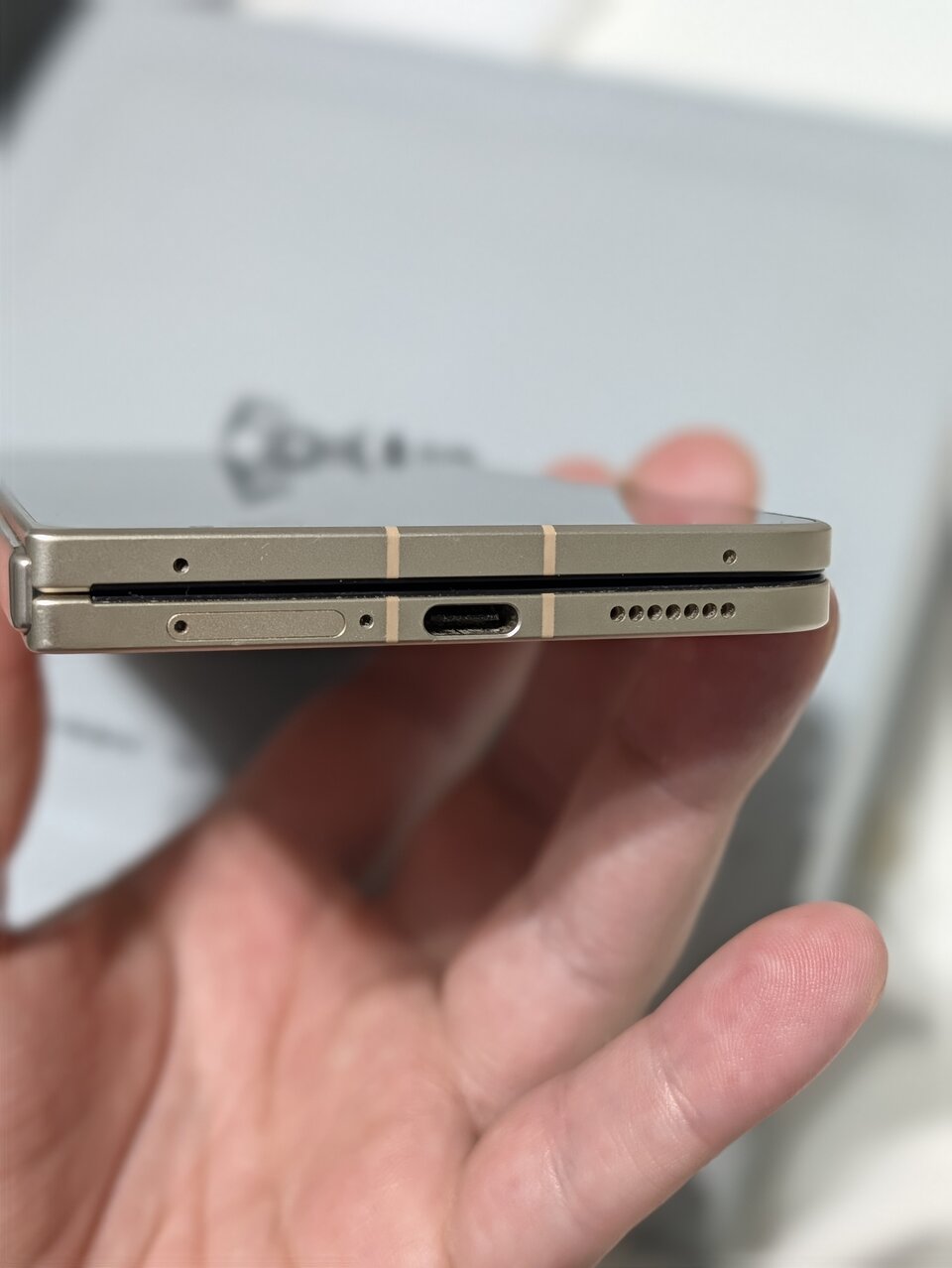
The frame is 7000-series aluminium, and the back, in aeronautical-derived fibre in the orange colourway, feels premium and clean. The joins are precise and even. The fingerprint reader is in the power button: quick and reliable, although on a phone in this class an ultrasonic sensor under the screen would not have gone amiss.
There are three water and dust ratings, IP56, IP58 and IP59: the phone withstands immersion and even high-pressure jets of hot water. Dust protection is partial, as on all foldables, but for a device with a hinge it is a result that gives welcome peace of mind in everyday use.
Display: two top-tier panels
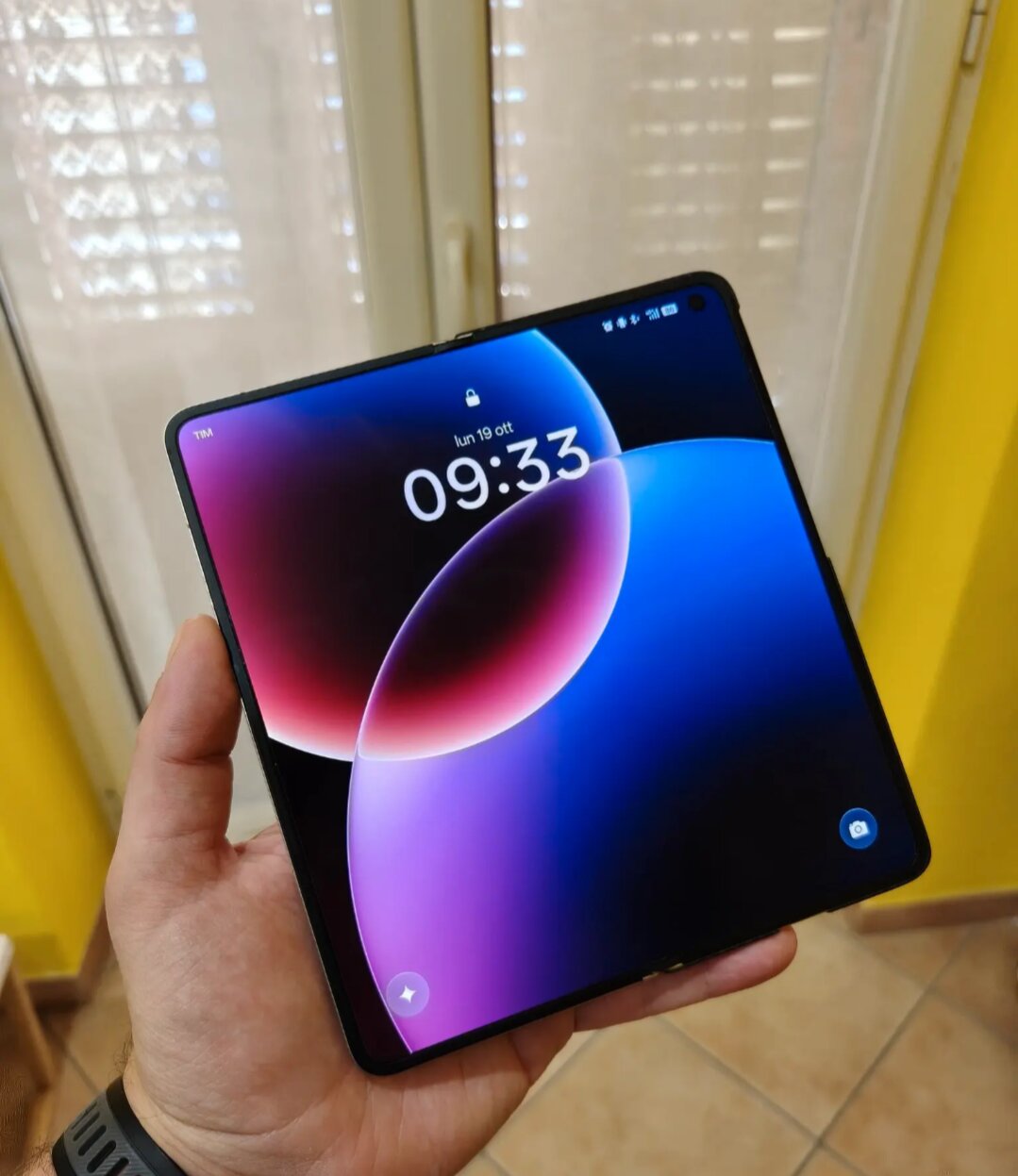
The displays are simply spectacular.
- Outer screen: 6.62 inches at 2616 × 1140 pixels, generous and well proportioned, comfortable for typing and browsing without frustration. It is protected by nanocrystal glass and reaches 120 Hz, like the inner one.
- Inner screen: an 8.12-inch LTPO OLED at 2480 × 2248 pixels, almost square, with adaptive refresh from 1 to 120 Hz, vivid colours and excellent calibration. The surface protective layer is "self-healing" and softens micro-scratches.
OPPO has done its homework on eye comfort too: both panels use 2160 Hz PWM dimming and go down to 1 nit, so reading in bed in the evening doesn't strain your eyes. In the daytime the brightness is more than enough to read everything even in direct sunlight. The claimed peaks, 2500 nits on the inner screen and over 3500 on the outer, only show up with HDR photos and video: in normal use the phone is more conservative, but I never found myself unable to read the screen.
Performance: Snapdragon 8 Elite Gen 5 without hesitation
Under the shell is the Qualcomm Snapdragon 8 Elite Gen 5 at 3 nm, with 16 GB of LPDDR5X RAM and 512 GB of UFS 4.1 storage. In daily use it is a powerhouse: impeccable smoothness, fluid and intuitive split-screen multitasking, demanding games at maximum detail with no unusual overheating. In benchmarks it sits among the best Android phones of 2026, with around 3.5 million points on AnTuTu.
One caveat: in prolonged stress tests the processor cuts performance sharply to keep temperatures in check, which is understandable in a body that is 4 mm thick when open. In real life, games included, I never noticed it.
Connectivity is complete: 5G with dual SIM and eSIM, Wi-Fi 7, NFC, USB-C 3.1 with video output and even an infrared transmitter so the phone can be used as a remote control. Ultra-wideband (UWB) is missing. The stereo speakers do their job, but they are not the strong point: average volume and little bass.
Software: mature ColorOS, and version 17 is already on the way
ColorOS confirms itself as a mature and very capable system: extremely smooth, well integrated with the ecosystem and designed to make real use of the large foldable display. The heart of the multitasking is Open Canvas, which places up to three apps side by side and lets you switch between them with a swipe from the edge. Apps open on the outer screen carry on onto the inner one when you open the phone.
On the side is the Snap Key, a customisable button that by default instantly saves whatever you are looking at to Mind Space, OPPO's AI-powered archive that summarises and organises content. Gemini is there too, with Google's AI features. If you take a lot of notes, you can add the OPPO AI Pen, sold separately: it works on both screens, has 4096 pressure levels and turns handwritten notes into text and tables.
The good news doesn't end there. The Find N6 is among the first models to receive ColorOS 17, based on Android 17, which OPPO is rolling out these days on the Global version: judging by the premise, it promises a further step forward for the interface and the overall user experience. OPPO also promises six years of security updates.
Camera: the Hasselblad collaboration really shows
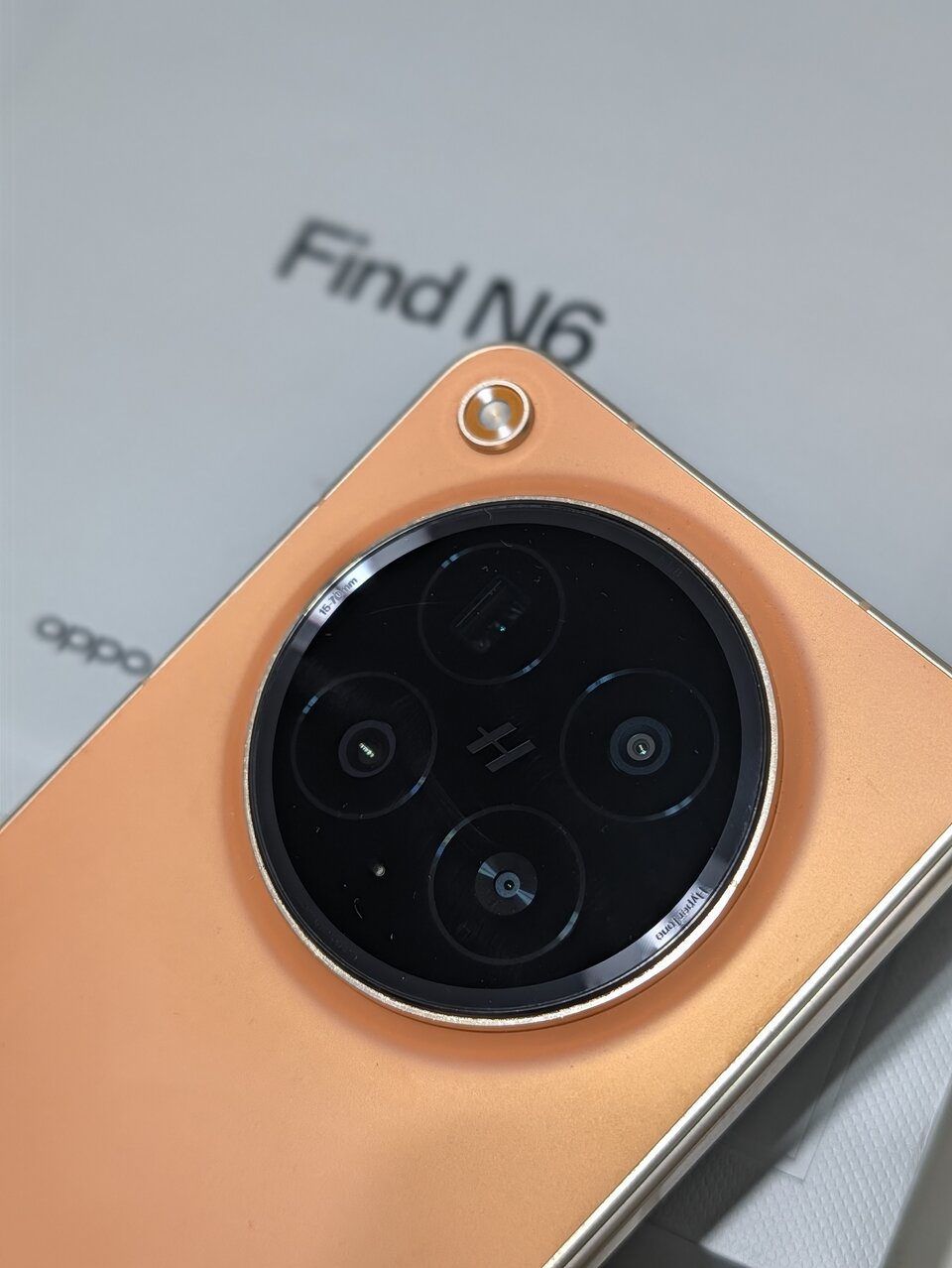
Having tried most of the foldables on the market (and while waiting to get my hands on the iPhone Duo), I can state with absolute certainty: this is the best camera in the foldable landscape.
The circular module houses four sensors:
- 200 MP main camera, 1/1.56" sensor, f/1.8 and optical stabilisation, equivalent to a 21 mm.
- 50 MP ultra-wide with autofocus, which doubles as a macro.
- 50 MP periscope telephoto with 3x optical zoom and stabilisation: it reaches 6x with no visible loss and focuses even at close range, for macro shots from a distance.
- True Colour spectral sensor and a 2 MP monochrome, which help read colours correctly under mixed lighting.
The Hasselblad collaboration really shows. The colour calibration, the rendering of colours and the versatility of the shots are qualities rarely found in such a complex format. In the daytime, with plenty of light, quality is comparable to the best traditional smartphones: incredible detail and exceptional handling of dynamic range. The ultra-wide, finally with autofocus, keeps pace with the other two cameras, and the 3x zoom is excellent for portraits.
When the light drops sharply, however, the physical limits of the smaller sensors typical of foldables begin to show. The phone soon resorts to night mode, lengthens exposure times, and with moving subjects some photos come out blurred. Quality falls in photos and, even more noticeably, in video, which loses a great deal in the dark and shows noise and uncertainty. In daylight, by contrast, 4K at 60 fps in Dolby Vision is available on all the cameras and the main one reaches 4K at 120 fps for slow motion.
Even so, these limits aside, it remains the best camera system I have ever seen on a foldable device. For selfies there are two 20 MP cameras, one per screen, but the beauty of a foldable is being able to use the rear cameras while looking at yourself on the outer screen.
Battery and charging: monstrous endurance
There is little to say here other than applaud. Thanks to the 6000 mAh silicon-carbon battery, endurance is astonishing: you get one to one and a half days of heavy use without the slightest problem, reaching the evening with charge to spare even when making full use of the large inner screen. With calmer use, and the outer screen used most of the time, you get close to two days.
On charging, OPPO is blisteringly fast. With the 80 W SUPERVOOC charger included in the box you get to about half in a quarter of an hour and to full in under 50 minutes, better still if the phone is open: closed, it slows down a little to keep the heat in check. Wirelessly it manages 50 W with AIRVOOC, and you can also charge a pair of earbuds or a smartwatch wirelessly by resting them on the back. Low-battery anxiety disappears entirely.
Find N6 versus the competition
| Model | Battery | Charging | Cameras | In Italy |
|---|---|---|---|---|
| OPPO Find N6 | 6000 mAh | 80 W wired, 50 W wireless | 200 + 50 + 50 MP (3x) | import only, about €1,700 |
| Samsung Galaxy Z Fold 8 Ultra | 5000 mAh | 45 W wired, 20 W wireless | 200 + 50 + 10 MP (3x) | official, from €2,299 |
| OPPO Find N5 | 5600 mAh | 80 W wired, 50 W wireless | 50 + 50 + 8 MP (3x) | import only |
On paper the Find N6 wins on battery, charging and telephoto, and costs quite a bit less than the Fold 8 Ultra. Samsung answers with official distribution, an Italian warranty, widespread service and the longest software support on the market. If you are looking at the new wide format instead, you can read our overview of the Galaxy Z Fold 8.
Verdict: who is it for?
If you aren't after the new "passport" format, wider and almost square when closed, the OPPO Find N6 is today the best choice on technical and build grounds among book-style foldables. The fiercest rival is the Galaxy Z Fold 8 Ultra, which has one heavy advantage: it is officially on sale in Italy, with Samsung warranty and service.
But if importing doesn't put you off, the experience OPPO's hardware delivers is hard to match: thin, with a crease you forget, top-tier cameras and endurance that no other foldable matches today. Before buying, though, it's worth checking carefully who handles the warranty and any repairs: on a foldable, if the inner screen breaks, that is a detail that carries weight.
Who it's for: anyone who wants the most complete book-style foldable, with the best photos in the category and a battery that doesn't let you down. Who it's not for: anyone who wants to buy in a shop with an Italian warranty, anyone who shoots a lot of night video, or anyone who wants a wide format when closed.
Frequently asked questions
Is the OPPO Find N6 on sale in Italy?
Not officially. The Global version exists, with Google services and Italian language, but it can only be bought from import sites, at around €1,700 for the 16/512 GB configuration.
Can you see the screen crease?
Physically it is still there, with a step of about 0.05 mm, but it is far more discreet than the competition: it only shows in raking light and, in everyday use, at times you forget it exists.
How long does the battery last?
With the 6000 mAh battery you get one to one and a half days of heavy use, nearly two with lighter use. It charges at 80 W wired, in under 50 minutes, and at 50 W wirelessly.
Is it water resistant?
Yes: it has IP56, IP58 and IP59 ratings, so it withstands immersion and high-pressure water jets. Protection against dust is partial.
Does it support the stylus?
Yes, the OPPO AI Pen works on both screens, but it is sold separately.
Will it get ColorOS 17?
Yes: the Find N6 is among the first OPPO models to receive ColorOS 17, based on Android 17, with global rollout starting at the end of October 2026. OPPO promises six years of security updates.
Translated from the Italian original. Read in Italian