Some smartphones win you over on the spec sheet, while others only manage to surprise you after you've lived with them for a while. The Samsung Galaxy Z Fold8, for me, firmly belongs in the second category.
I used it for three months, in the 512 GB version and the lovely Pistachio colour, alternating it every day with iPhone Duo. Calls, messages, social media, work, browsing, photos and a great many videos. I didn't leave it in a drawer as a second phone to be pulled out for watching a film: I treated it as a main smartphone.
And it's precisely thanks to this direct comparison that I reached an interesting conclusion: if I had to choose the phone I like best overall today, I'd still choose iPhone Duo. But the Galaxy Z Fold8 has a few features that, for certain uses, I find even superior. Samsung has made one of the most interesting foldables I've ever tried. But it isn't perfect yet.
Launch price: from €2,099 (12/256 GB); €2,299 for the 512 GB version I tested, €2,699 for the 1 TB model with 16 GB of RAM.
The new Fold: wider, not narrower
This summer Samsung split the family in two. The Galaxy Z Fold8 Ultra inherits the classic Fold formula: a long, narrow outer screen and three cameras including a telephoto. The Galaxy Z Fold8, the subject of this review, is a new product built around a different idea: closed, it should feel like a normal phone; open, it should offer a screen with the proportions of a small tablet.
The result is a shorter, wider foldable, with a 10:16 outer screen and a 4:3 inner one. It is also the lightest Fold Samsung has ever made: 201 grams.
Specifications
| Dimensions and weight | Closed 123.9 × 81.9 × 9.7 mm; open 161.4 × 123.9 × 4.5 mm; 201 g |
|---|---|
| Materials | Armor Aluminum frame, Gorilla Glass Victus 2 back, Gorilla Glass Ceramic 3 outer screen |
| Inner display | 7.6" foldable Dynamic AMOLED 2X, 2448 × 1848 pixels (4:3), LTPO up to 120 Hz, 3000 nits peak |
| Outer display | 5.5" Dynamic AMOLED 2X, 1972 × 1248 pixels (10:16), up to 120 Hz |
| Processor | Qualcomm Snapdragon 8 Elite Gen 5 for Galaxy (3 nm) |
| Memory | 12 GB of RAM with 256 or 512 GB; 16 GB with 1 TB; not expandable |
| Rear cameras | Main 50 MP f/1.8 with OIS (1/1.56" sensor); ultra-wide 50 MP f/1.9, 120° |
| Front cameras | 10 MP on the outer screen and 10 MP on the inner one |
| Video | Up to 8K at 30 fps, 4K at 120 fps |
| Battery | 4800 mAh, silicon-carbon |
| Charging | 45 W wired, 20 W wireless (Qi 2.2), 4.5 W reverse |
| Connectivity | 5G, Wi-Fi 7, Bluetooth 6.0, NFC, UWB, nano SIM + eSIM, USB-C 3.2, Samsung DeX |
| Protection | IP48 |
| Software | Android 17 with One UI 9, seven years of updates |
| Colours | Graphite, Cream, Lavender, Pistachio (Samsung.com only) |
| Launch price | €2,099 (12/256 GB), €2,299 (12/512 GB), €2,699 (16 GB/1 TB) |
At last, an outer screen that really makes sense
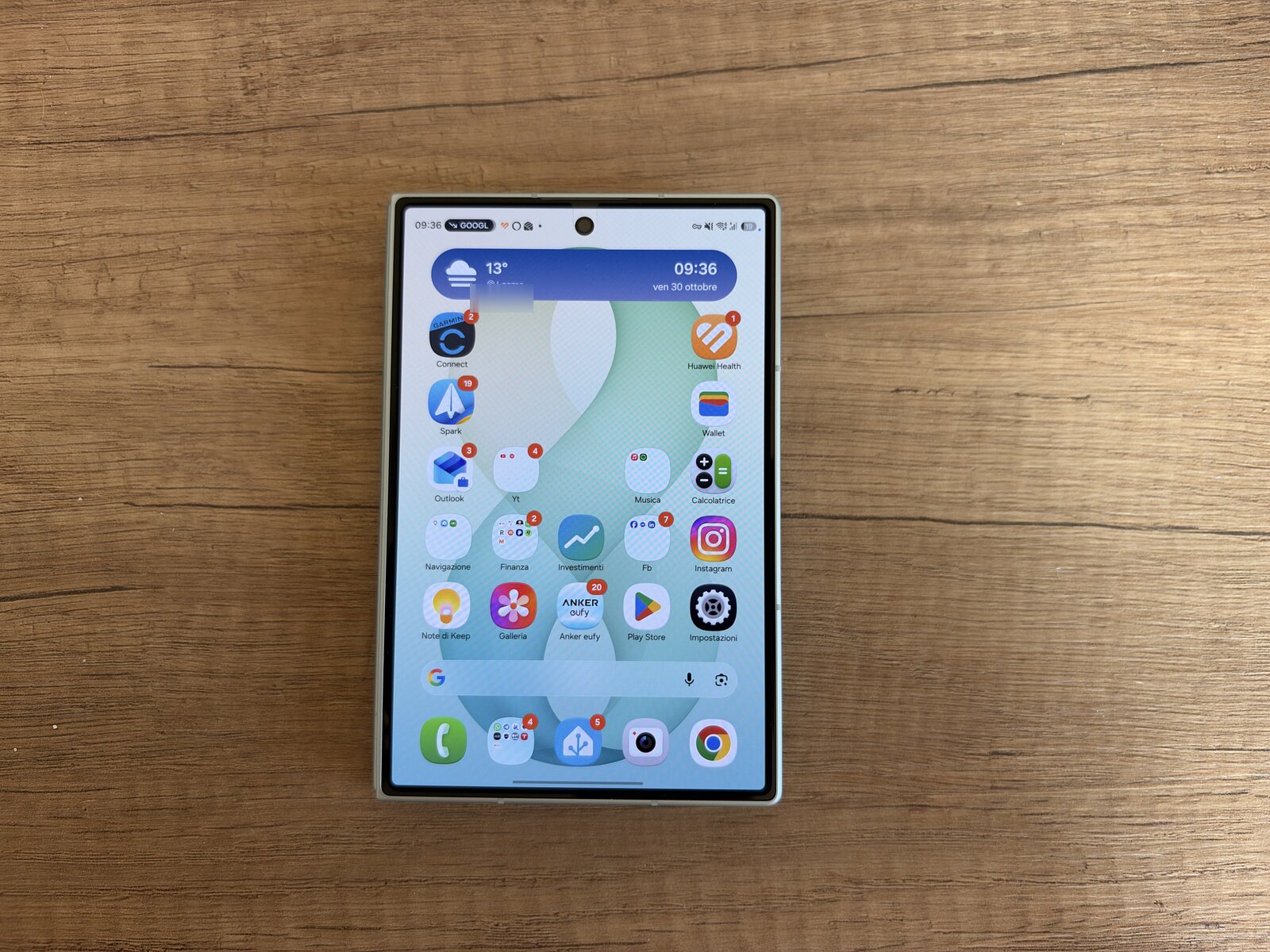
Let's start with what I think is the most important change of this generation: the new format.
For years the most obvious compromise of the Fold has been its outer screen. Handy for quick tasks, certainly, but too narrow to use like a normal smartphone. With the Fold8, Samsung has changed approach, and the result is far more convincing.
The 5.5-inch outer display is finally roomy, well proportioned and, above all, usable. Writing a message, replying to an email, browsing, using social media or reading a notification no longer involves that feeling of getting used to a slightly odd screen. The keyboard has the right amount of room and the keys are no longer squeezed together.
What I appreciated most is that I can use it comfortably even with one hand. It sounds like a trivial detail, but in everyday life it makes a real difference. For the first time I didn't feel I was using a secondary screen while waiting to open the main one: the outer display became, to all intents and purposes, my main screen for a good part of the day.
Not everything works perfectly, though. Some apps aren't yet optimised for this format and show cropped elements or interfaces that don't fit the available space well, especially when you rotate the phone. It shows how much the foldable experience still depends on developers.
The inner display is the real show
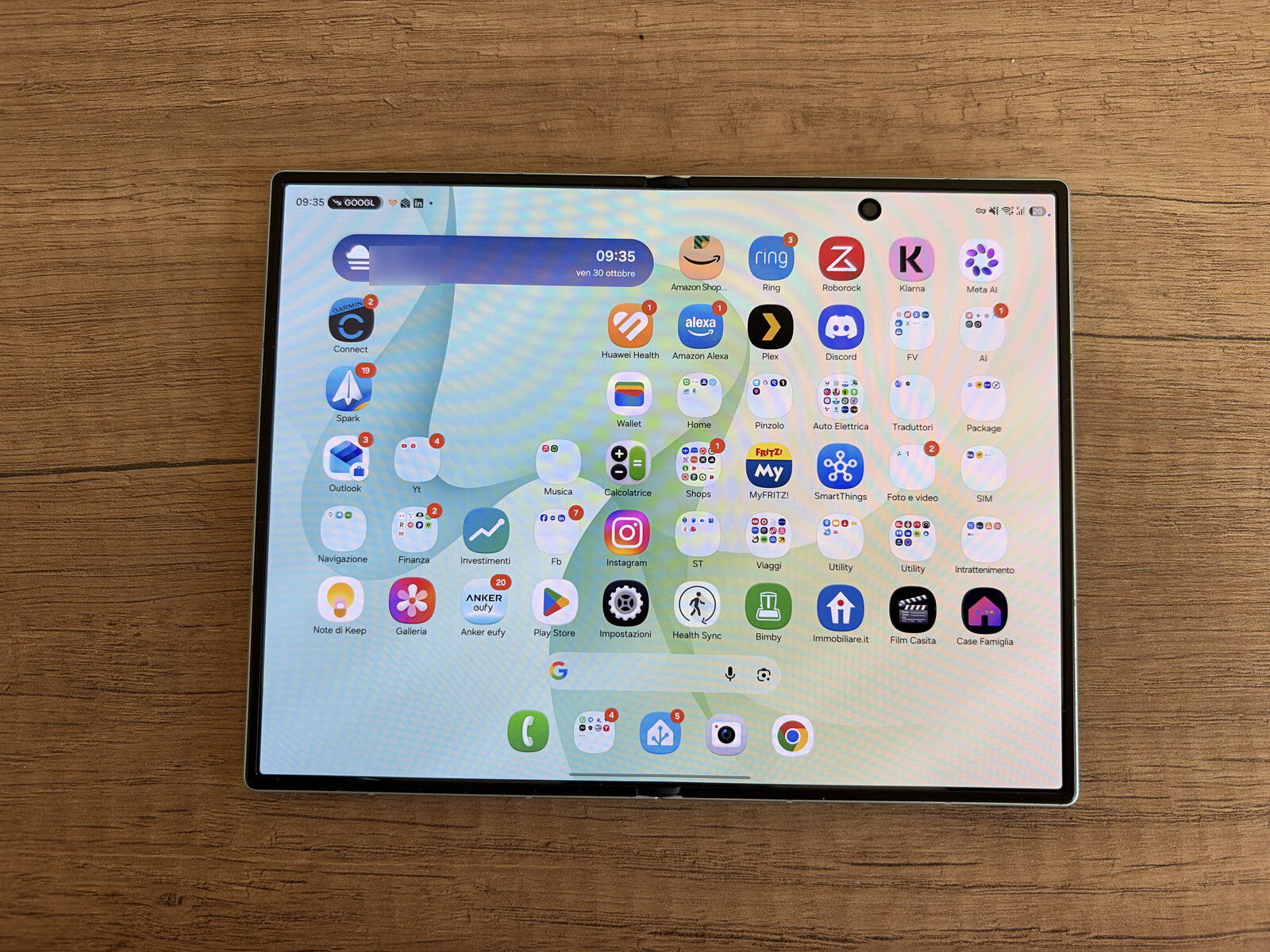
And then you open it. This is where the Galaxy Z Fold8 truly shows its identity.
The 7.6-inch 4:3 inner screen is spectacular. The proportions completely change the way you use content and, above all, the way you watch video. I've always found foldables interesting, but I wasn't entirely convinced that a bigger screen justified all the compromises. After three months I have to admit that watching video on a screen this size finally makes sense.
Films, TV series, YouTube: everything takes on another dimension. It isn't just a bigger screen, it's a more immersive experience, closer to a small tablet than to a smartphone. Reading, consulting documents and working with several apps side by side also become much more pleasant: One UI lets you split the screen between up to three apps, and with DeX the phone connected to a monitor becomes almost a computer.
Brightness is excellent: the panel reaches a peak of 3000 nits and is perfectly readable in the sun. The crease is there, but looking at the screen head-on it almost disappears; you only notice it with light from the side. The one detail that jars is the inner camera cut-out, in the middle of the right-hand half, which sometimes ends up in the middle of the content.
The interesting thing is that I didn't find myself opening it only to do something special. At some point it becomes a natural gesture. Need more space? Open it. Want the convenience of a normal smartphone again? Close it. Simple.
Comparison with iPhone Duo: two different philosophies
It was precisely by using the Galaxy Z Fold8 and iPhone Duo together that I came to understand better what makes the Samsung interesting.
A caveat first: personally, overall, I still prefer iPhone Duo. It's the device I'd choose if I had to name my ideal smartphone. But that doesn't mean the Fold8 doesn't have something extra.
Its dimensions and, above all, the way it has been designed to be used in portrait are two aspects I enjoyed enormously. Once open, the Fold8 makes very good use of the available space: the vertical format lets you use the whole display naturally, without constantly having to change how you hold the phone.
It isn't just a matter of having more inches available, but of having a large screen that keeps a logic of use very close to that of a traditional smartphone, while widening its possibilities. When I use the open Fold8 to browse, read, watch video or work, I understand perfectly the point of this product. And I never feel I'm holding a tablet that's too small or a smartphone that has simply been stretched: it's a category of its own.
Design: the foldable finally feels natural
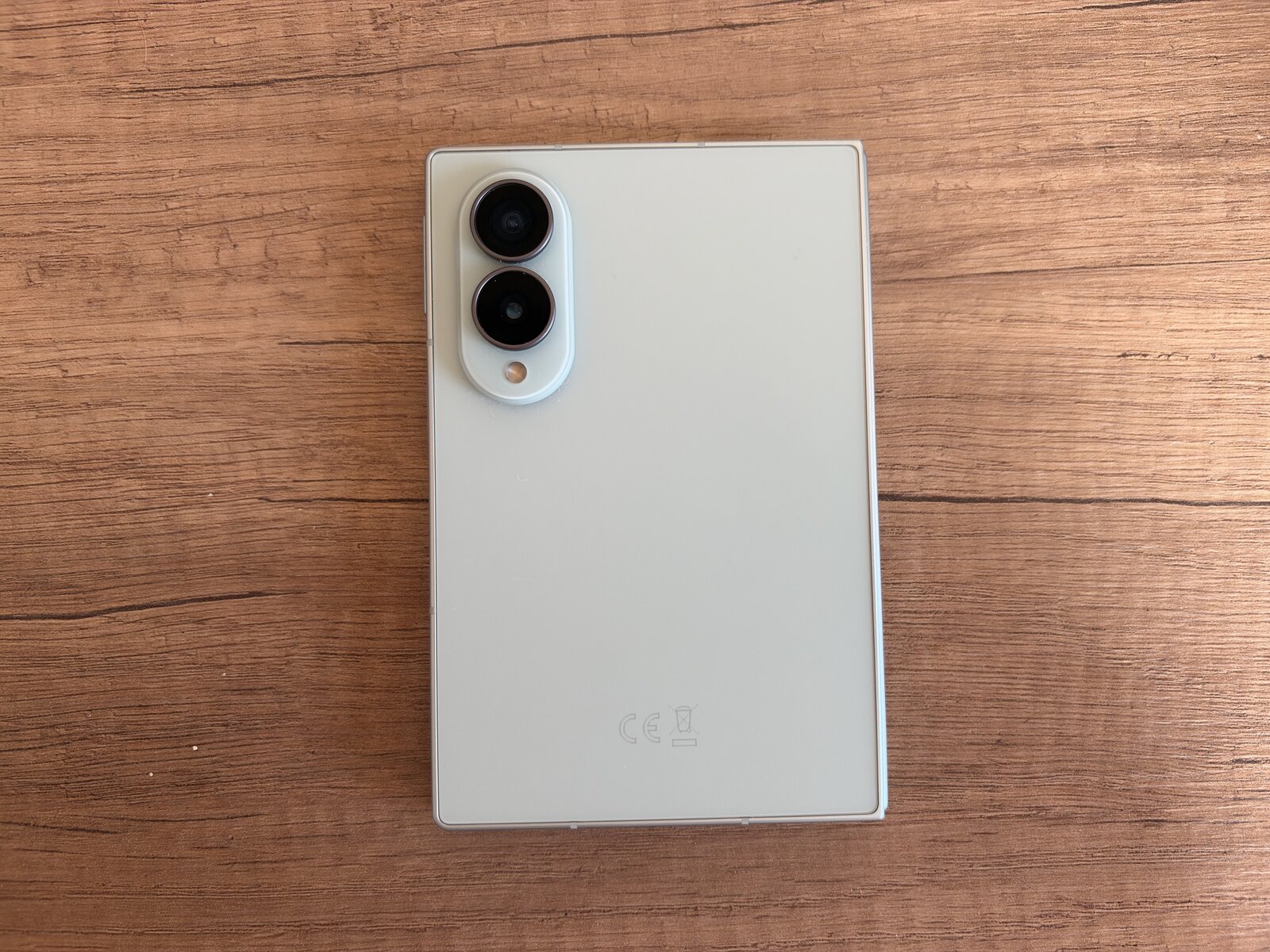
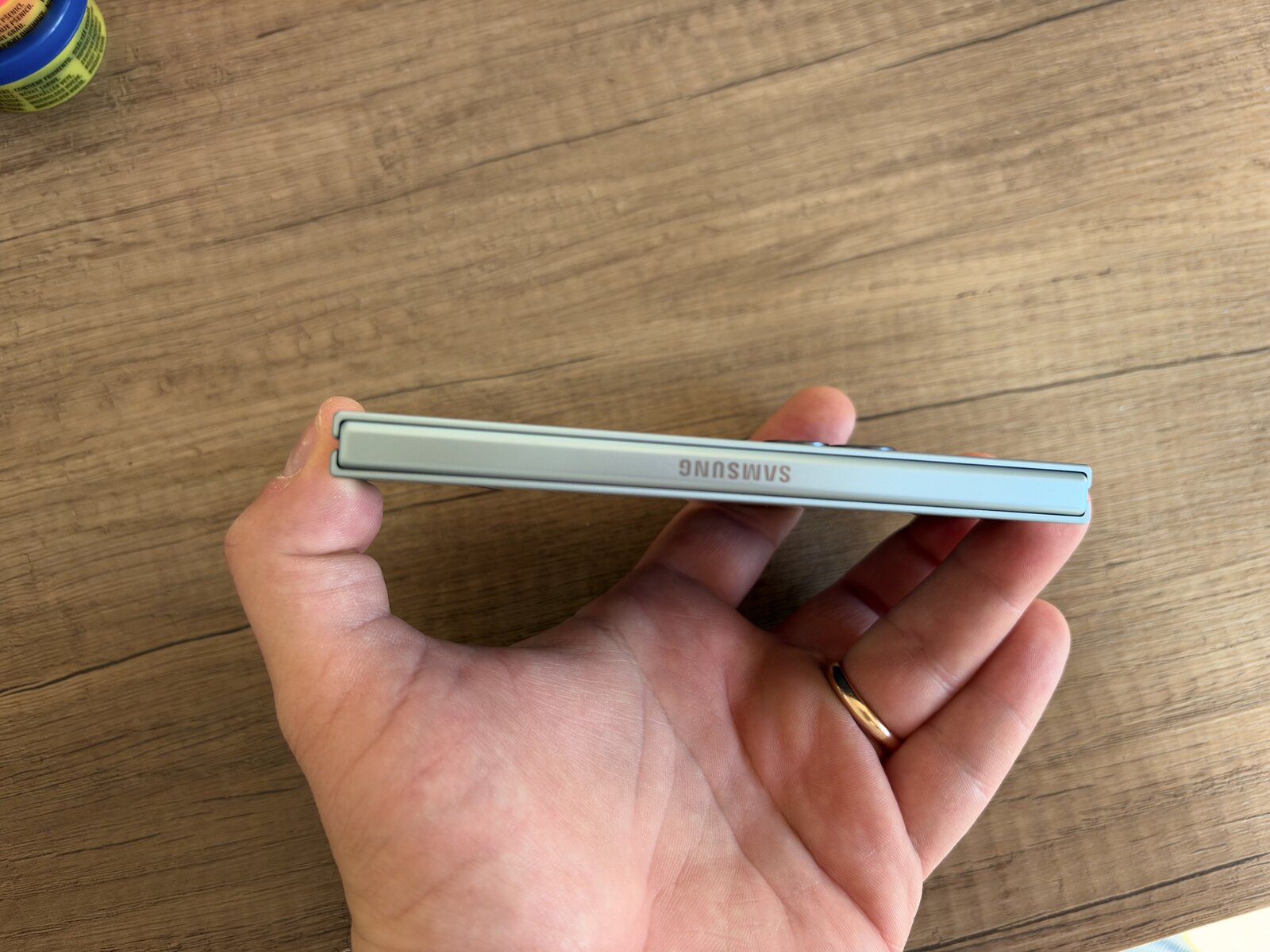
The 512 GB Pistachio version is, for me, one of the most beautiful configurations available. It's elegant, distinctive without being over the top, and has the personality that more traditional smartphones often lack. The matte glass back doesn't hold fingerprints, and the camera module, with the two lenses one above the other, is compact and well finished. Worth knowing: Pistachio can only be bought from Samsung's own shop.
Beyond the colour, what won me over is the overall feel in use. The new format makes the phone far better balanced in daily life: it is 9.7 mm thick closed and 4.5 mm open, and at 201 grams you forget it's in your pocket.
The opening and closing mechanism is lovely too. Opening and closing the Fold8 is easy, immediate and natural. I never felt I had to be careful about a gesture that, after a few days, becomes practically automatic. It's one of those details that don't make the headlines on the box, but matter enormously in everyday use.
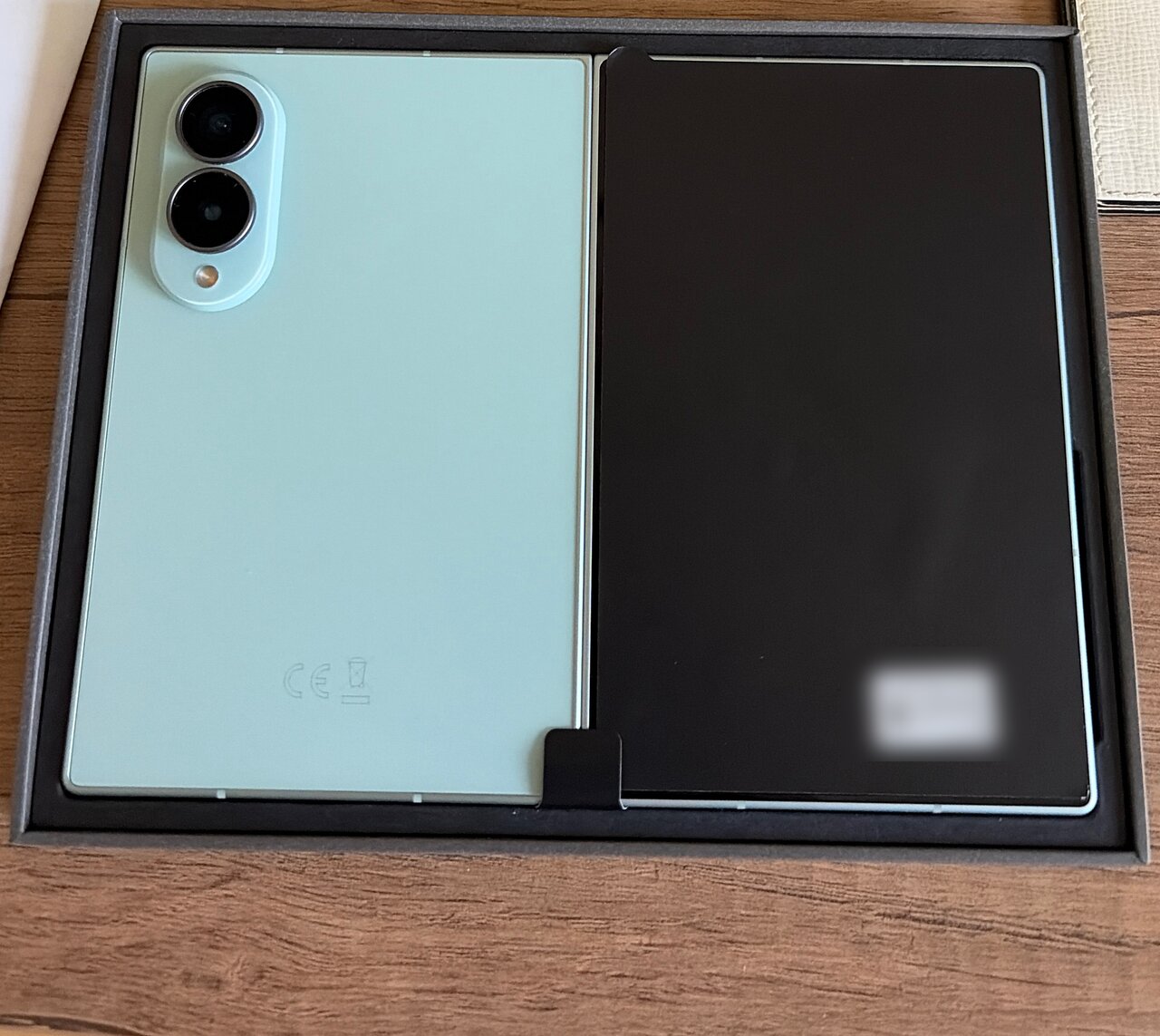
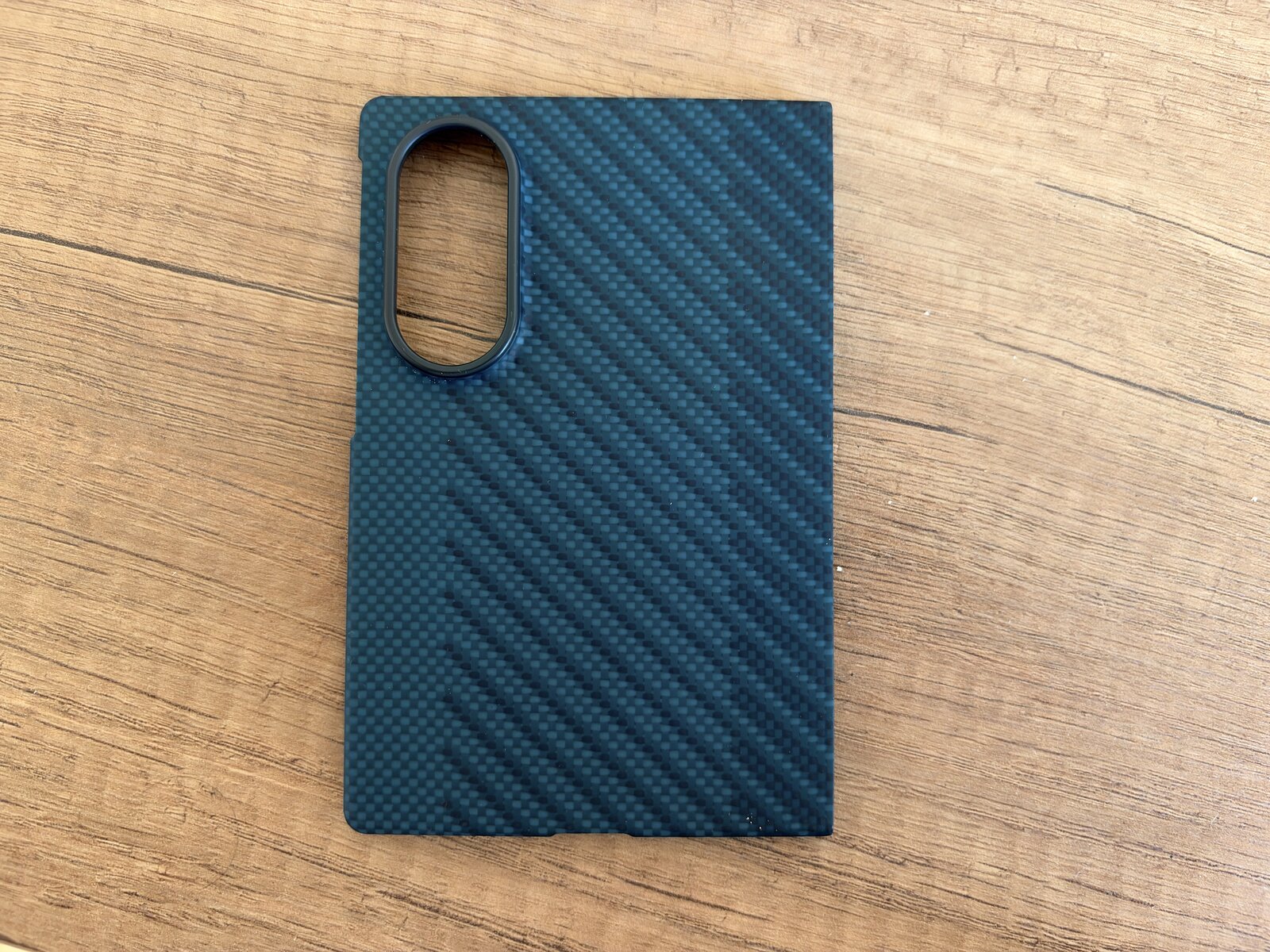
It is IP48 certified: it withstands immersion in fresh water, but protection against dust is limited, as on almost all foldables. The fingerprint reader is in the side button, fast and accurate.
Performance and software
Inside is the Snapdragon 8 Elite Gen 5 for Galaxy, with 12 GB of RAM in the 512 GB version. In everyday use it's very fast and never hesitates, even when constantly switching between the outer and inner screens.
The limit comes with heat. In the summer sun, or with the heaviest games, the phone warms up and lowers the brightness of both screens to protect itself; in the most demanding titles it's best to drop one level of detail for consistently smooth performance.
The software is One UI 9 on Android 17, with Galaxy AI features and Gemini built in and the promise of seven years of updates, both Android and security. Multitasking is the strong point: three apps side by side on the inner screen work really well. Some rough edges remain because of the new format, from apps that change layout when you rotate the phone to a few interfaces that don't make good use of the space. This is where Samsung and developers still have work to do.
Battery: its real weak point
We come to what, after three months, I consider the Galaxy Z Fold8's most important compromise: the battery.
Capacity rises to 4800 mAh, more than the Fold7, and in standardised tests the improvement shows. But in my real-life use, with it as my main phone and often using both displays, by around 6 pm I had to plug it in to get through the evening without worrying.
That doesn't mean the phone drains straight away or that you can't get to the end of the day. It does mean it never gave me the peace of mind I expect from a smartphone in this category and, above all, at this price.
Charging, at least, is a big step forward: with 45 W wired you recover about two thirds of the battery in half an hour and reach a full charge in a little over an hour. Wireless charging is 20 W, Qi 2.2 compatible, but without built-in magnets: to attach it to magnetic chargers you need a dedicated case. I'd still have preferred a more generous battery, able to see me through to the evening without compromises.
Cameras: a department that has to convince
The Fold8 was born with a different philosophy from the Ultra, and it shows most of all here. On the back there are two cameras: a 50 MP main with optical stabilisation and a 50 MP ultra-wide. The telephoto lens, present on previous Folds and on the Ultra, is missing.
In daylight the photos are good and consistent, with Samsung's typical colours. The problem comes when you zoom: beyond 4x quality drops noticeably, because it's digital zoom. At night the main camera copes, but detail gets smudged and a little grain appears. On video, though, Samsung hasn't cut back: 8K at 30 fps, 4K at 120 fps and the Log profile for those who want to grade colour afterwards.
When you spend more than 2,000 euros you expect a camera system worthy of the price. It's a compromise to bear in mind, especially for anyone who considers photography an important part of daily use. Anyone who puts it first should look at the Fold8 Ultra.
Fold8 versus the competition
| Model | Format | Battery | Telephoto | Price |
|---|---|---|---|---|
| Samsung Galaxy Z Fold8 | wide, 5.5" + 7.6" (4:3) | 4800 mAh | no | from €2,099 |
| Samsung Galaxy Z Fold8 Ultra | classic, narrow when closed | 5000 mAh | 10 MP, 3x | from €2,299 |
| OPPO Find N6 | classic, 6.62" + 8.12" | 6000 mAh | 50 MP, 3x | around €1,700 (import) |
The Fold8 is Samsung's most affordable foldable and the most practical when closed. Anyone who wants the most from cameras and battery life in the classic format can look at the Fold8 Ultra or, if they're not afraid of importing, at the OPPO Find N6, which our Fulvio Barbato has just reviewed.
The verdict after three months
What struck me most about the Galaxy Z Fold8 is that I never felt I was using a product that was interesting merely because it was technologically unusual. I genuinely enjoyed using it.
The new outer screen finally makes it a practical smartphone even when closed. The inner display is spectacular and transforms how you watch content. Opening and closing are immediate and natural, and the design in Pistachio is a real success.
Of course, it isn't perfect. The battery is its most obvious limit, some apps still need better optimisation and the cameras ask for some compromises. And yet, having used it alongside iPhone Duo, I realised how much Samsung has found an identity of its own in this category.
iPhone Duo remains my personal choice, but the Fold8 has an advantage not to be underestimated: its dimensions, combined with a very well-judged vertical format, let you really make use of all the display's space. And when you use it for several hours, you feel the difference.
I don't think a foldable is the right choice for everyone. But Samsung is heading in the right direction. The Galaxy Z Fold8 didn't simply convince me of the merits of foldables: it made me realise how hard it is to go back once you're used to having such a large screen always in your pocket. And that is perhaps the greatest compliment I can pay it.
My verdict: a pass, with some reservations.
Who it's for: anyone who wants a foldable that works like a normal phone when closed and becomes a small tablet for video, reading and work when open. Who it's not for: anyone who spends the whole day away from a power socket, or who takes a lot of photos with zoom.
Frequently asked questions
What is the difference between the Galaxy Z Fold8 and the Fold8 Ultra?
The Fold8 is the new wide model, with a 5.5" 10:16 outer screen and a 7.6" 4:3 inner one, two cameras and a weight of 201 grams. The Fold8 Ultra keeps the classic format, narrow when closed, and adds a telephoto lens and a 5000 mAh battery, at a higher price.
How long does the Galaxy Z Fold8's battery last?
With heavy use and alternating between the two screens, in my test I reached around 6 pm before needing to recharge. With 45 W you recover about two thirds of the battery in half an hour.
Does the Galaxy Z Fold8 have a telephoto lens?
No: it has a 50 MP main camera and a 50 MP ultra-wide. Zoom is digital and loses quality noticeably beyond 4x.
Where can I buy the Pistachio colour?
Only from Samsung's online shop. Graphite, Cream and Lavender are also available in other stores.
How many years of updates will it receive?
Samsung promises seven years of Android and security updates.
Samsung Galaxy Z Fold8
Translated from the Italian original. Read in Italian