
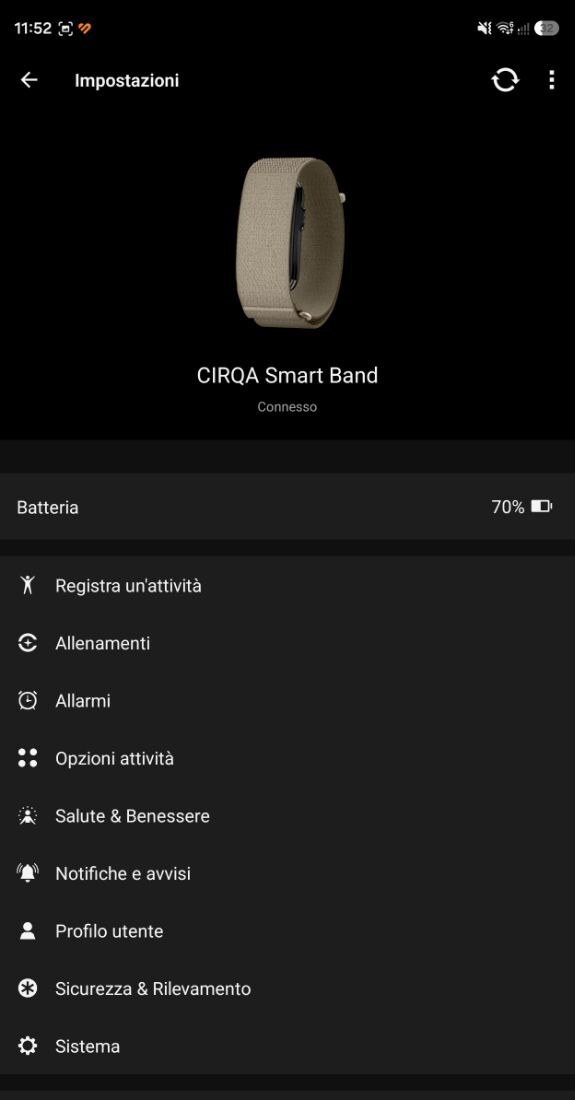
Screenless smart bands are the wearable trend of the moment, and Garmin has decided to have its say with the Cirqa. No display, no notifications: just sensors, a vibration and the Garmin Connect app to crunch the numbers.
I wore it for exactly one month, 24 hours a day, and since 26 September alongside the Huawei Watch D3 on the other wrist. The picture of what works and what needs rethinking is pretty clear.
Price: €199.99 in Italy on the Garmin website and on Amazon, 189.90 CHF in Switzerland. Two sizes (S-M and L-XL) and four colours.
In brief: what the Garmin Cirqa is
It is a 27 × 47 × 9 mm reinforced-plastic module that slides into a fabric strap with a hook-and-loop fastening. Inside are the optical heart-rate sensor, the pulse oximeter, the skin-temperature sensor and the accelerometer. On the outside there is a single button, a coloured LED and a vibration motor. Your smartphone does everything else.
It is Garmin's answer to Whoop, with one difference that matters: Whoop is paid for through a mandatory subscription, whereas the Cirqa is bought once and the main metrics are free.
Specifications
| Module | 27 × 47 × 9 mm, 14.8 g (about 21 g with the strap) |
|---|---|
| Strap | Fabric with hook-and-loop fastening, 24 mm, machine-washable; S-M for wrists from 12 to 20 cm, L-XL from 14.5 to 24 cm |
| Sensors | Optical heart-rate monitor, SpO2, skin temperature, accelerometer |
| Controls | One physical button, multicolour status LED, vibration |
| Screen | None |
| GPS | No, it uses the smartphone's |
| Connectivity | Bluetooth and ANT+ (can broadcast heart rate to a bike computer) |
| Water resistance | 5 ATM, suitable for swimming |
| Battery life | up to 10 days claimed, about 5 in my use |
| Charging | Proprietary Garmin cable, about an hour |
| Subscription | Not required (Connect+ optional for coaching and extra features) |
| Compatibility | Android and iPhone with Garmin Connect |
| Price | €199.99 / 189.90 CHF |
Design and ergonomics: good-looking, but with a catch
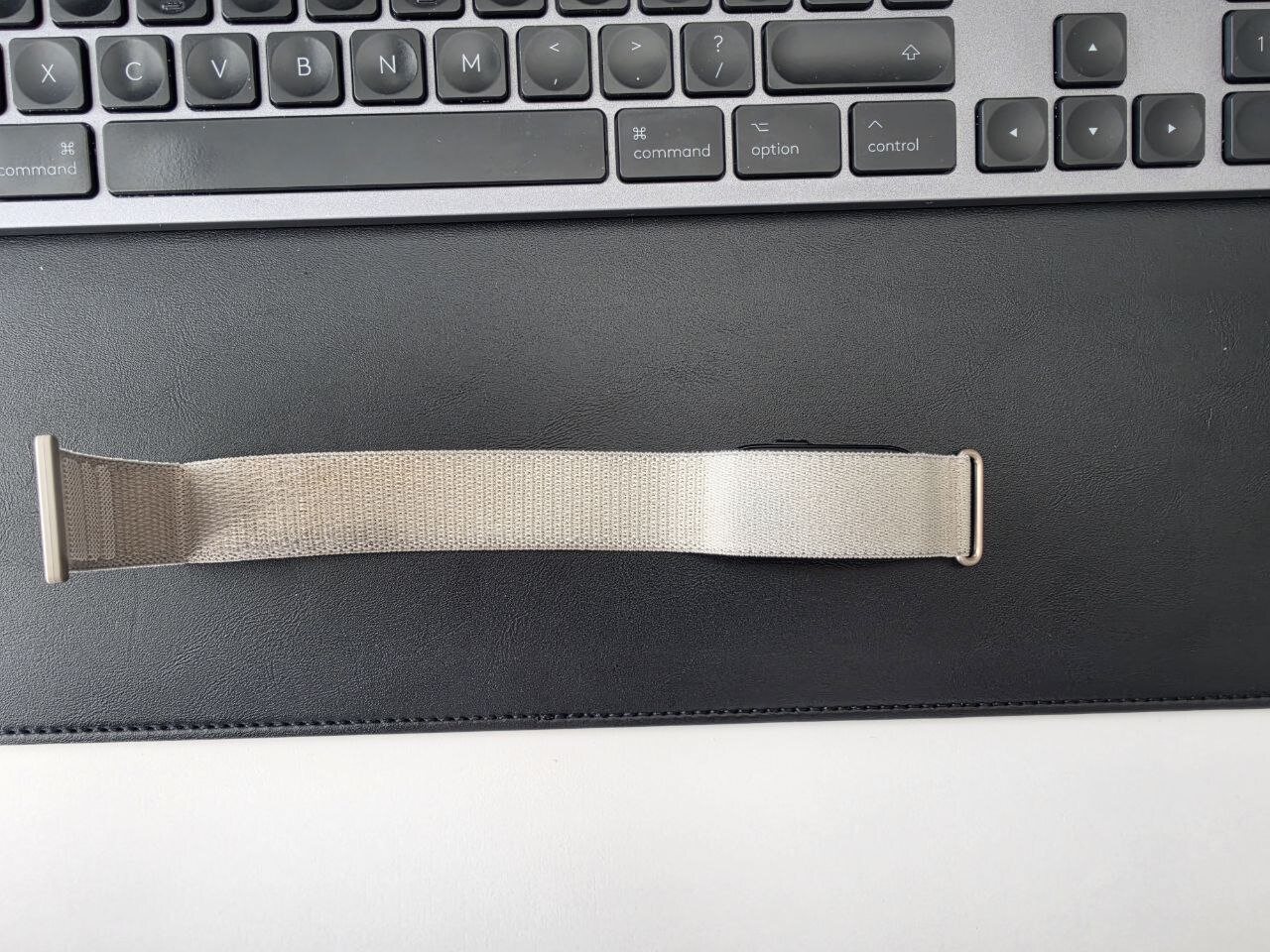
Aesthetically, the Cirqa cuts a fine figure. The fabric wraps the whole module, so on the wrist it looks like a simple sports bracelet and almost entirely hides its technological nature. With a shirt, or alongside other bracelets, it goes unnoticed.
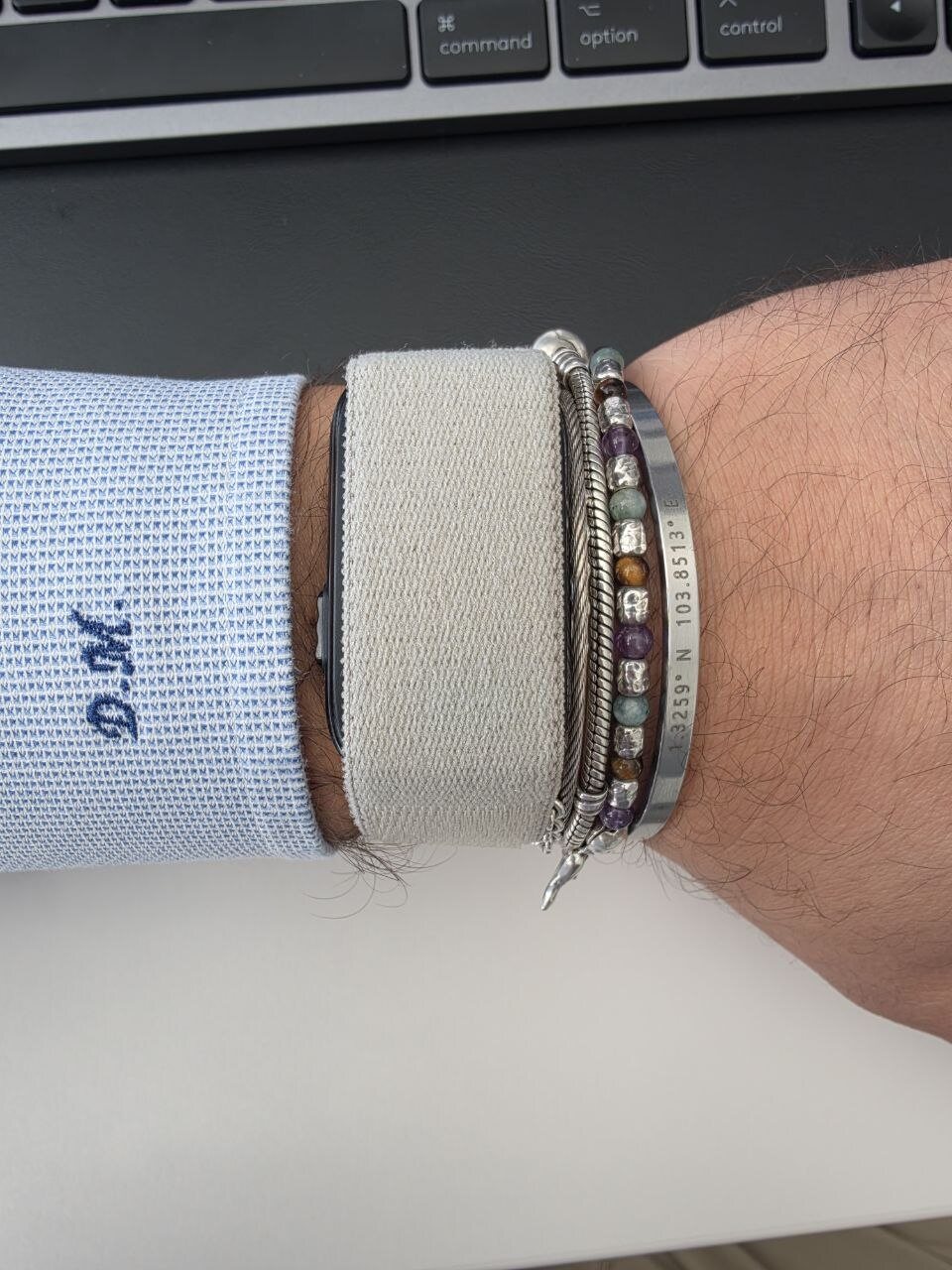
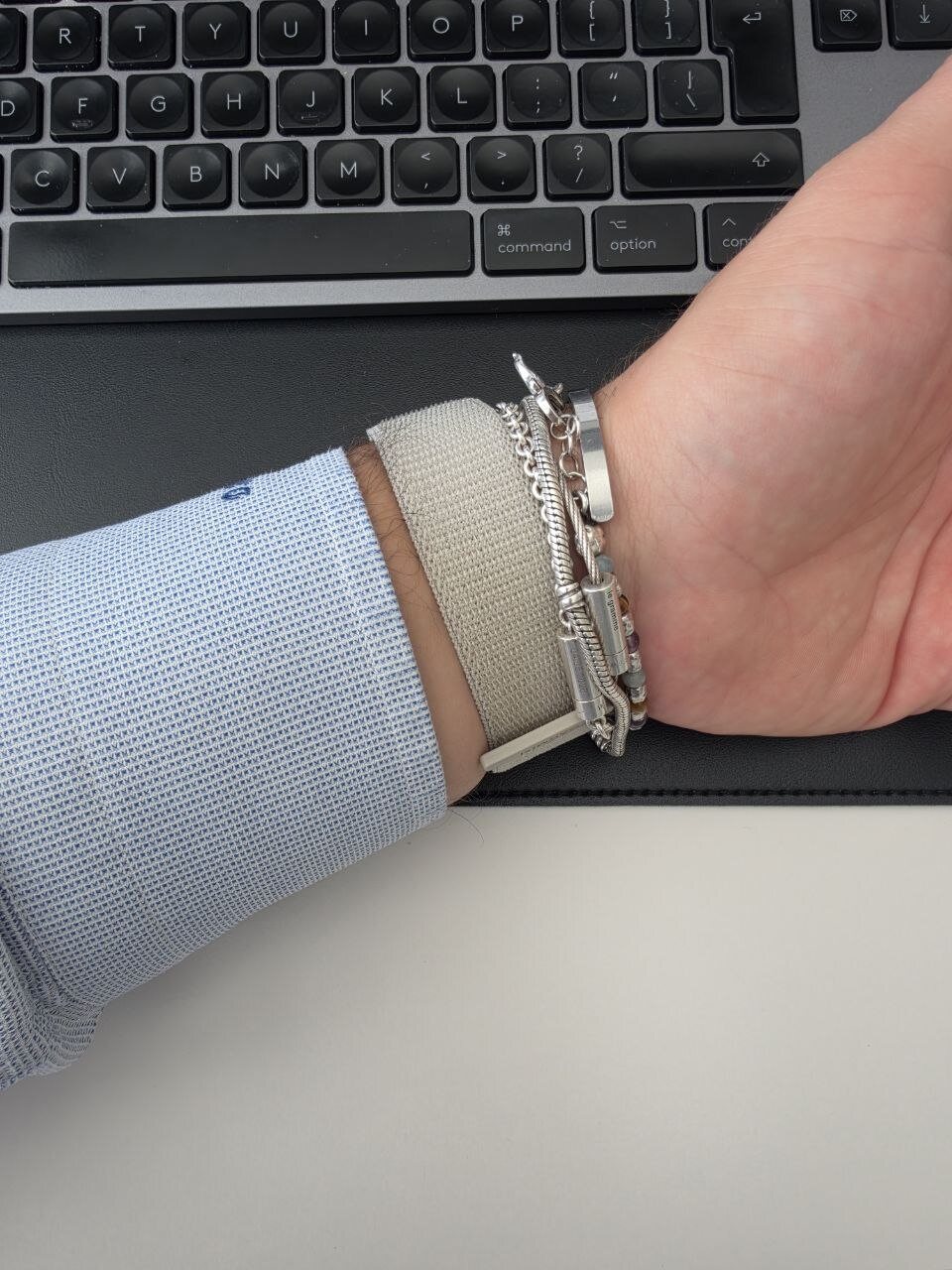
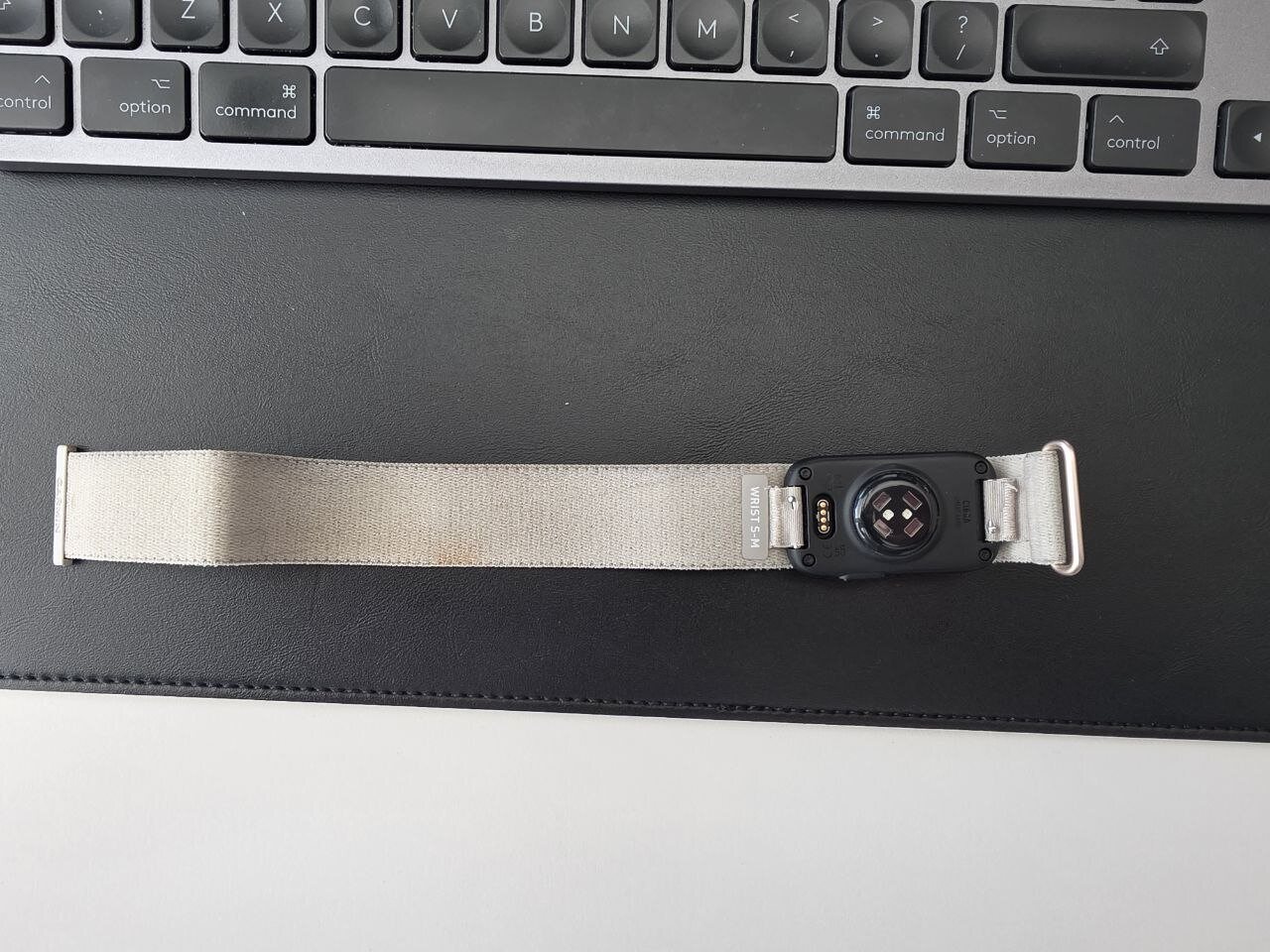
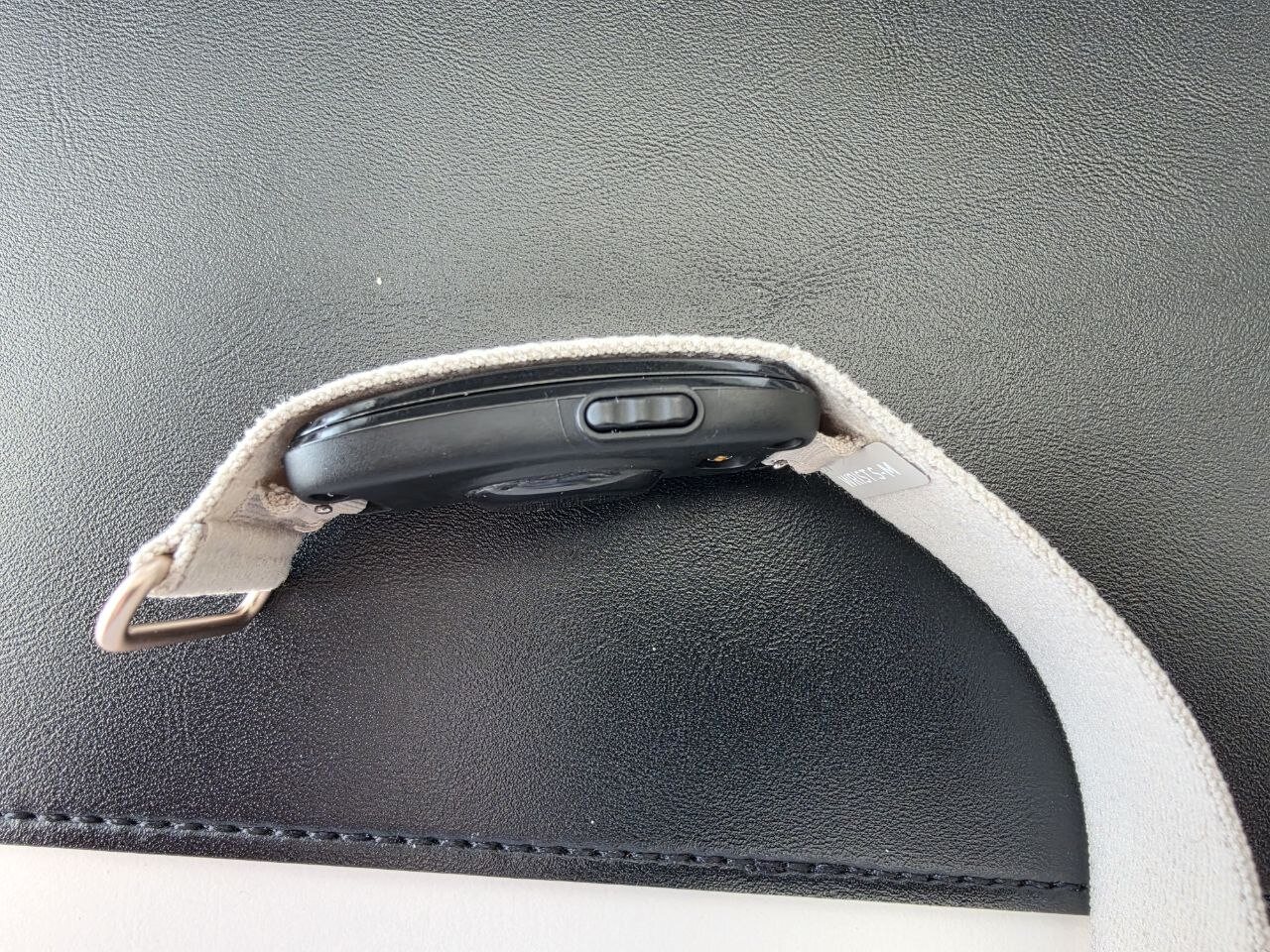
The ergonomics have a significant flip side, though: the optical sensor sticks out far too much. At times it is almost annoying on the arm, and every time I take the Cirqa off it leaves a deep mark on the skin that takes a while to fade. The module is also long (47 mm) and on a slim wrist it tends not to sit well on the curve: for anyone with this problem, Garmin sells an armband separately.
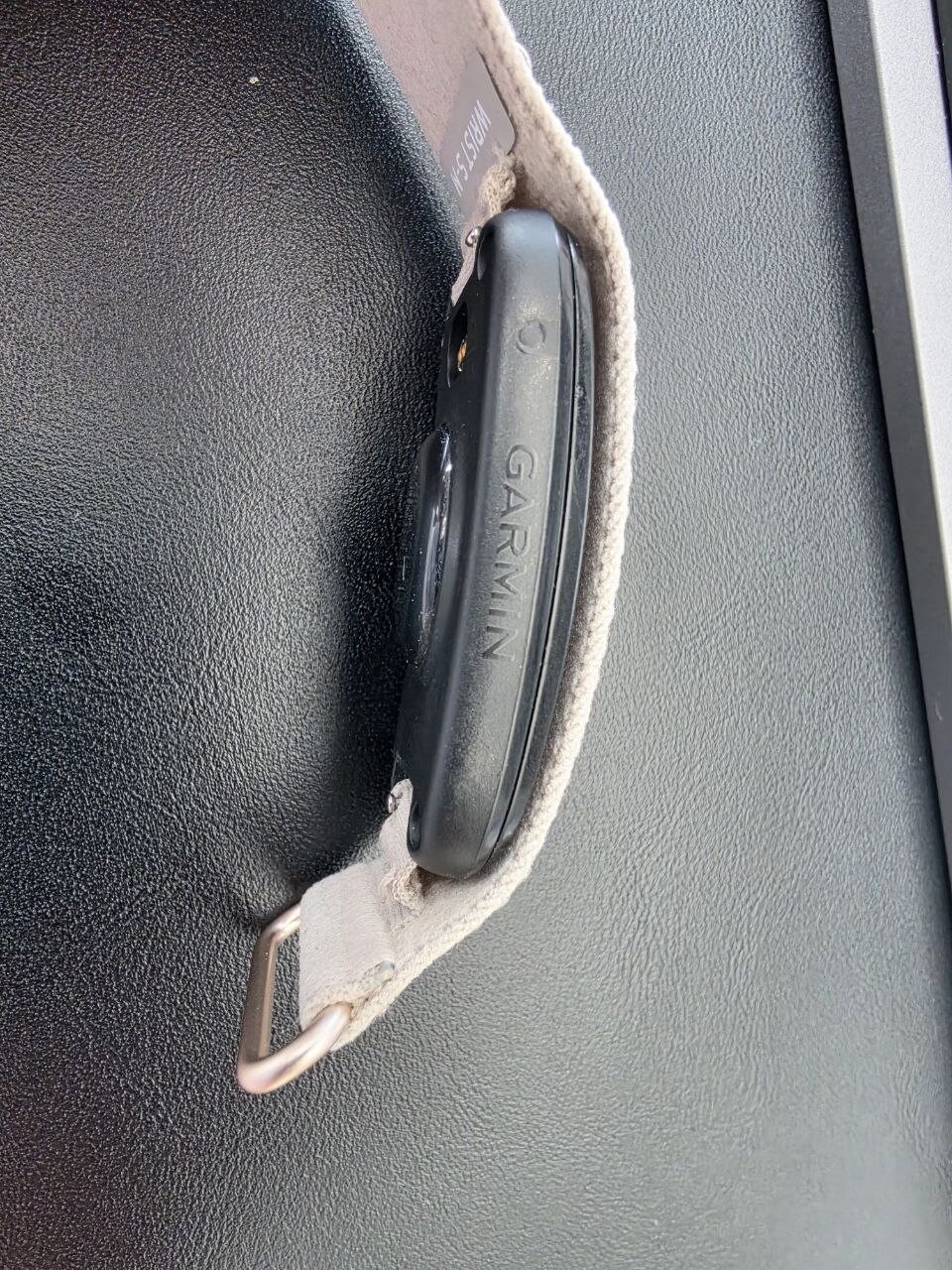
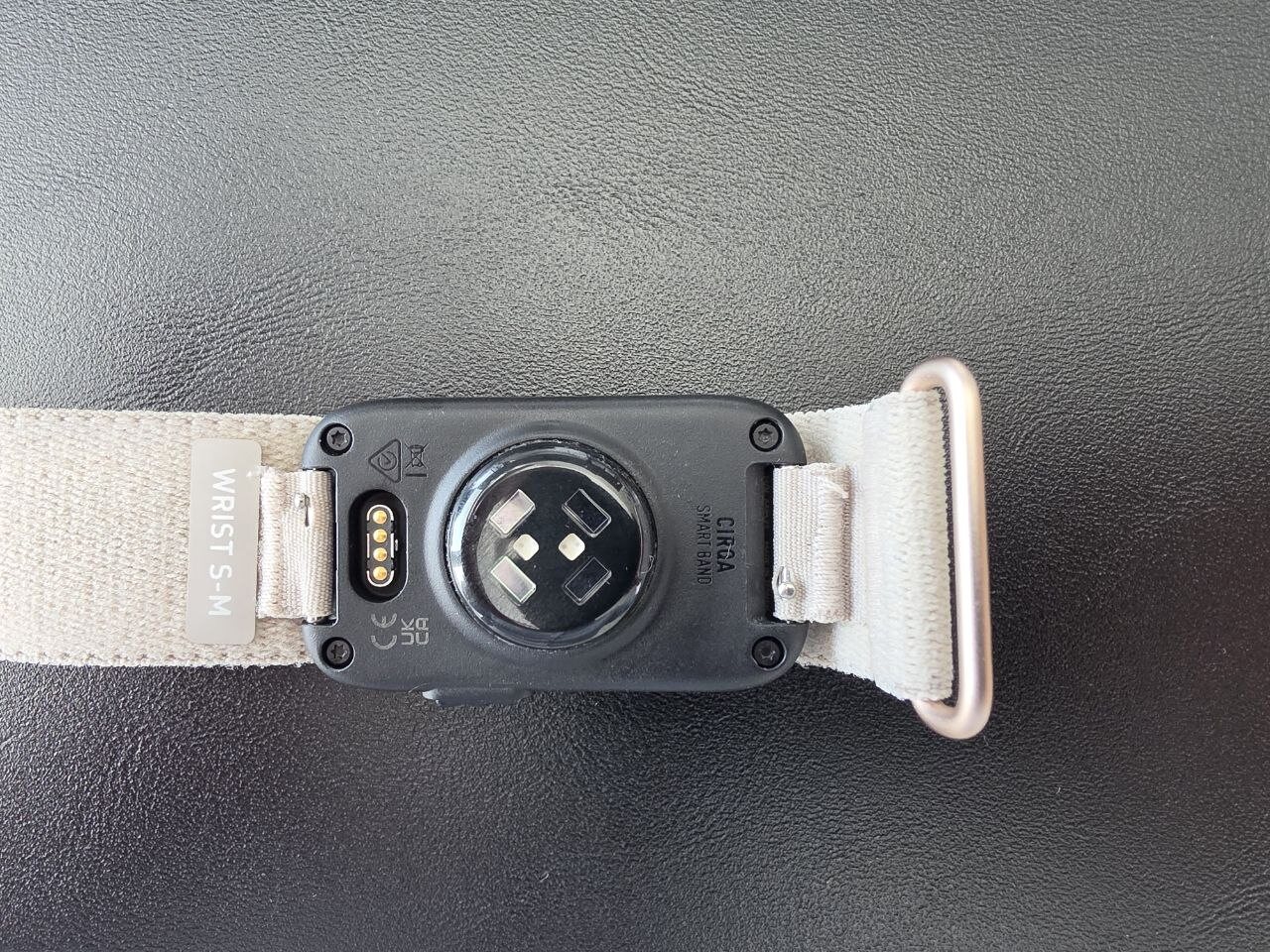
On the side is the only button: one press starts or stops your favourite activity, and it is also used to snooze or switch off the alarm. The LED next to it changes colour to show what is happening (green while recording, red at the end of an activity, purple when pairing).
The strap gets dirty, but it goes in the washing machine
The light-coloured fabric inevitably gets dirty easily. After a month mine already has a few marks. The good news is that it can be machine-washed, as the Garmin manual also explains: you take out the module (which must on no account get wet this way), close the hook-and-loop fastening, put the strap in a laundry bag and wash it on a delicate cycle at a maximum of 40 °C, with no fabric softener or bleach. Then leave it to air-dry.
Sensors and accuracy: the real strong point
On the sensor front, the Cirqa has nothing to envy in bulkier devices. In my use its accuracy is on a par with Garmin's expensive high-end sports watches: heart rate, stress, HRV, skin temperature and sleep are all picked up excellently. For anyone after reliable data on their own health, it is a very solid tool.
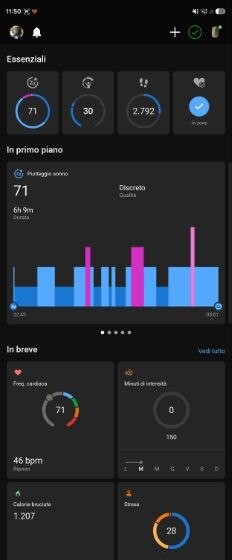
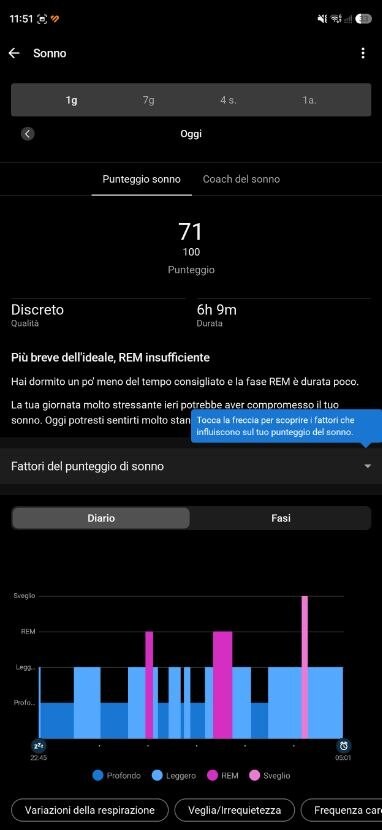
Sleep is where a screenless device makes the most sense: nothing lights up at night and the light module doesn't get in the way. Every morning Garmin Connect gives you a score with the sleep stages, overnight heart rate, saturation, breathing and the change in skin temperature. Over the past week my average was 7 hours 20 minutes with a score of 81; the most recent, shorter night came in at 71 and the app flagged the REM phase as too short.
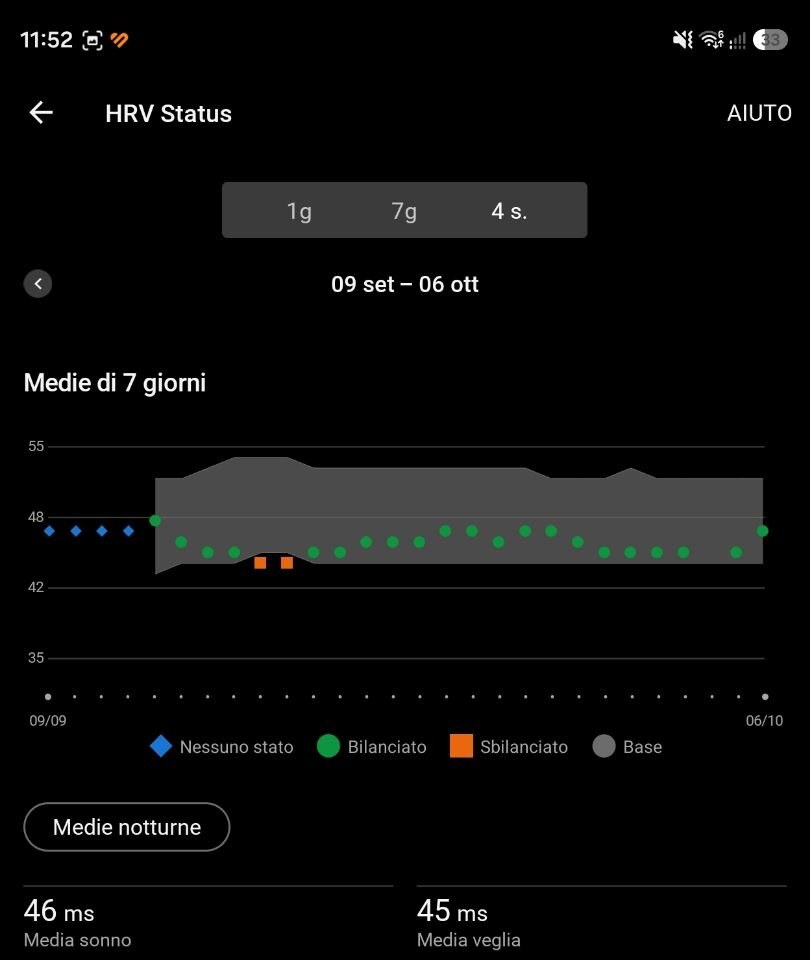
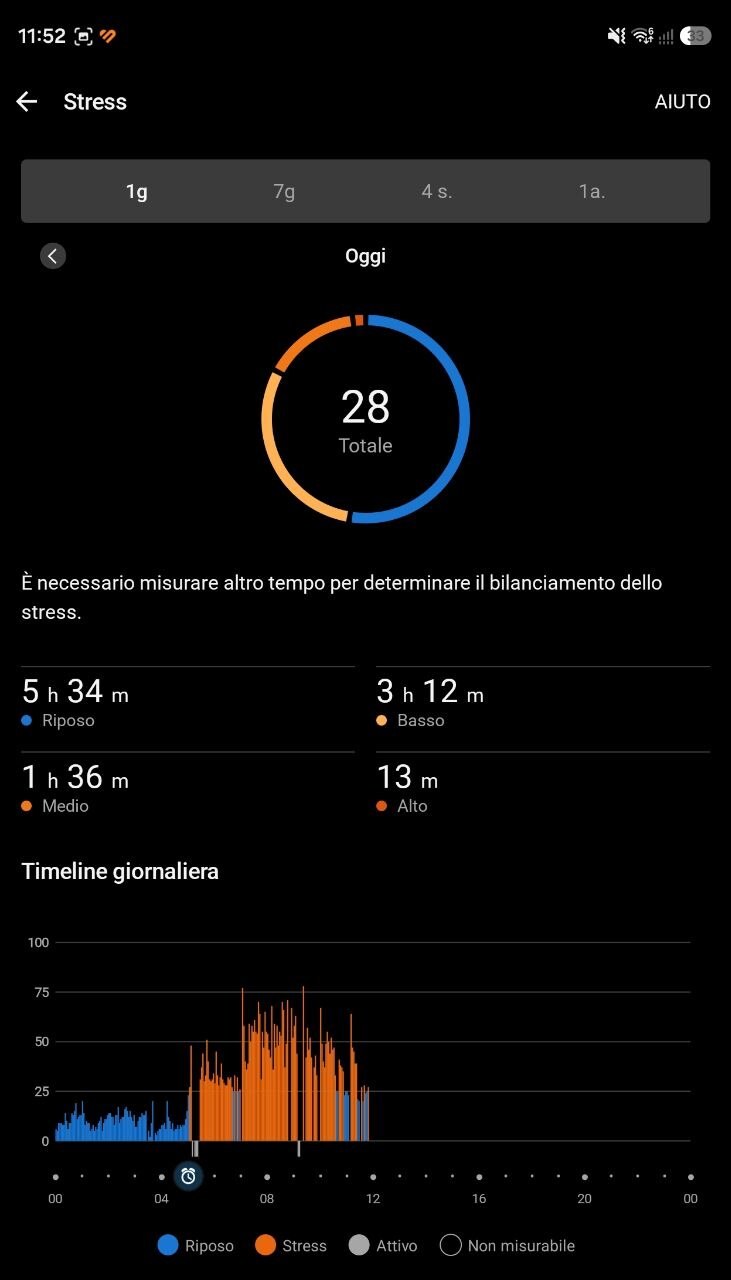
Heart rate variability (HRV) needs a few days to build a baseline: for the first four days the app shows no status, then the chart kicks in. Over my month the seven-day average stayed between 44 and 48 milliseconds, with only two "unbalanced" days in mid-September. Stress, averaging 33 out of 100 over the four weeks, follows the days faithfully: low at night, high on busy mornings.
Automatic activity recognition
With no screen, most workouts are recognised automatically. At first the system struggles a little, especially with less conventional sports, and it sometimes suggests the wrong type of workout. But it learns from your habits: the classic walk after lunch is now always picked up automatically and recorded correctly. For important workouts it is still worth pressing the button at the start, so you don't lose a single minute.
There is no GPS: the route for walks and runs comes from the smartphone, so you have to carry it with you. On the other hand, the Cirqa is waterproof to 5 ATM and can be used in the pool, which you can't do with the Huawei Watch D3.
Silent alarm and smart features
With no screen, vibrations are the only way the Cirqa speaks. The motor is excellent, but it is limited to system information: alarm, goals reached, move reminders, battery. No app notifications come through, not even a vibration for a message or an email. In a tracker designed to get you away from screens it is a consistent choice, but you need to know about it.
The absolute gem is the alarm. It vibrates on the wrist, is silent and extremely effective, and in smart mode it picks the best moment in the 30 minutes before the set time. If there are small children at home and you have to get up early, this vibration wakes you gently without any risk of anyone else in the room opening their eyes. For me it has been a real lifesaver.
The "premium" features are free
This is where the Cirqa really stands out. Unlike some direct competitors that charge a monthly subscription for advanced data analysis, Garmin Connect makes everything available for free: Body Battery (your energy reserves calculated from sleep and stress), Sleep Coach (how much you should sleep tonight), HRV Status, recovery times, training load and fitness age. The Connect+ subscription (€8.99 a month) is optional and mainly adds coaching, guided workouts and the AI assistant.
Battery life: promises and reality
Garmin claims up to 10 days, but in my daily use the battery lasts about 5 days, no more, with continuous monitoring and oximetry on at night. That is still a good figure for such a small device, but worth knowing if you are hoping to forget the charger for almost two weeks. Charging, with the proprietary cable, takes about an hour.
The alternatives
| Product | Price | Subscription |
|---|---|---|
| Garmin Cirqa | €199.99 | Optional |
| Whoop 5.0 / MG | Included in the subscription | Mandatory, from about $199 a year |
| Polar Loop | about €180 | None |
| Fitbit Air | about €99 | Optional |
If you're already in the Garmin world, the Cirqa gives you the same metrics as your watch, in a format you can wear at night too. If you prefer a screen on your wrist, you'll find alternatives in our guide to the best smartwatches.
Frequently asked questions
Do you need a subscription to use the Garmin Cirqa?
No. Body Battery, sleep, Sleep Coach, HRV, stress and recovery times are free in Garmin Connect. The Connect+ subscription is optional and adds coaching, guided workouts and artificial intelligence features.
How long does the battery really last?
Garmin claims up to 10 days. In my use, with continuous monitoring and sleep tracking every night, I get about 5 days. A full charge takes about an hour with the proprietary cable.
Does the Garmin Cirqa have GPS?
No. To record the route of a run or a walk it uses the smartphone's GPS, so you have to carry your phone with you.
Can you swim with the Garmin Cirqa?
Yes, it is waterproof to 5 ATM. You can use it in the pool and in the shower.
How do you wash the strap?
In the washing machine, after taking out the module: fastening closed, laundry bag, delicate cycle at a maximum of 40 °C, no fabric softener or bleach, then air-dry.
Does it show smartphone notifications?
No. It only vibrates for the alarm, goals, reminders and system alerts. Messages, emails and calls stay on the phone.
Which size should you choose?
S-M for wrists from 12 to 20 cm, L-XL from 14.5 to 24 cm. On a slim wrist the long module may sit badly: in that case it is worth considering the armband sold separately.
Garmin Cirqa or Whoop?
The metrics are on a par, and Garmin's training metrics are even richer. The difference is cost: Whoop requires a mandatory annual subscription, while the Cirqa is paid for just once.
Verdict
At €199.99 the Garmin Cirqa has an honest, competitive price, especially with no subscription. It is the right smart band for anyone who wants to monitor their metrics continuously but also wants to get away from screens: accurate sensors, sleep and recovery analysed as on a high-end Garmin, and a silent alarm that is worth a lot on its own.
The flaws are real: the sensor sticks out too far and leaves a mark, real-world battery life is half the claimed figure, the light fabric gets dirty, and there is no GPS or notifications.
Using it alongside the Huawei Watch D3 turned out to be a winning combination: I leave blood pressure measurement to the Huawei, and continuous, light, almost invisible monitoring to the Cirqa.
Who it's for: anyone who wants reliable data on sleep, recovery and stress without another screen to look at, anyone already in the Garmin ecosystem, anyone who wants an alarm that disturbs nobody. Who it's not for: anyone who wants notifications on the wrist, anyone who runs without a phone and needs GPS, anyone whose skin is sensitive to the pressure of the sensor.
Garmin Cirqa
Translated from the Italian original. Read in Italian


