
Some smartwatches estimate blood pressure with an optical sensor and then ask you to calibrate them every month against a proper monitor. The Huawei Watch D3 does something different: inside the strap there's a small air cuff, a micropump inflates it and the pressure is genuinely measured, just like the doctor's device, only at the wrist.
I've been wearing it since 26 September, day and night. In these ten days I've done two 24-hour blood pressure holters, more than a hundred readings, walks, nights of sleep and a comparison with my upper-arm Omron. This review starts from there.
Price: €449 list price in Italy, available since the end of September from the Huawei Store, on Amazon, in electronics chains and, new this time, in a first selection of pharmacies too.
In short: what changes from the Watch D2
The measuring principle is the same as the previous model, and Huawei doesn't claim better accuracy. The changes are all around it:
- Slimmer: 11.3 mm against the D2's 13.3. You can feel the difference on the wrist.
- Bigger, brighter screen: 1.92 inches (it was 1.82) and a 3,000-nit peak, roughly double the D2.
- Blood pressure before and after exercise: a new certified mode for walking, running and cycling, with advice on intensity if your starting pressure is high.
- Arrhythmia analysis from the pulse wave and an estimate of arterial stiffness.
- Dual-frequency GPS (L1 + L5) and Bluetooth 6.0.
- Faster charging: about 75 minutes from 0 to 100%.
Anyone who already has a D2 and is happy with it can keep it. Anyone starting from scratch today, in my view, should look at the D3.
Specifications
| Dimensions | 46.5 × 41 × 11.3 mm |
|---|---|
| Weight | about 40 g without strap (about 75 g with the inflatable strap) |
| Materials | Aluminium alloy case, front glass, plastic back |
| Display | 1.92" AMOLED, 480 × 408 pixels, 328 ppi, 3,000-nit peak |
| Blood pressure | Oscillometric method with micropump and airbag in the strap; single reading, 24-hour holter, before and after exercise (CE medical device) |
| Sensors | Accelerometer, gyroscope, compass, optical heart-rate sensor, SpO2, single-lead ECG, skin temperature, barometer, differential pressure sensor |
| Connectivity | Bluetooth 6.0, dual-band GPS (GPS, Galileo, GLONASS, BeiDou, QZSS), NFC |
| Audio | Microphone and speaker, Bluetooth calls |
| Battery life | up to 6 days claimed (5-7 in my use), about 1-2 days with the 24-hour holter on |
| Charging | Proprietary magnetic wireless, about 75 minutes |
| Wrist | 13 to 21 cm, with M (13-16 cm) and L (16.1-21 cm) straps both in the box |
| Compatibility | Android 9 or later, iOS 13 or later |
| Colours | Black, Gold, Light Gold |
| Price | €449 |
Design and comfort: it finally looks like a watch
The first Watch D looked like a medical instrument in disguise. The D3, on the other hand, passes for an ordinary rectangular smartwatch: black aluminium case, knurled crown on the right, a button below it and the speaker grille on the other side. The design is very basic, it won't turn heads, but it doesn't look out of place with a shirt either.
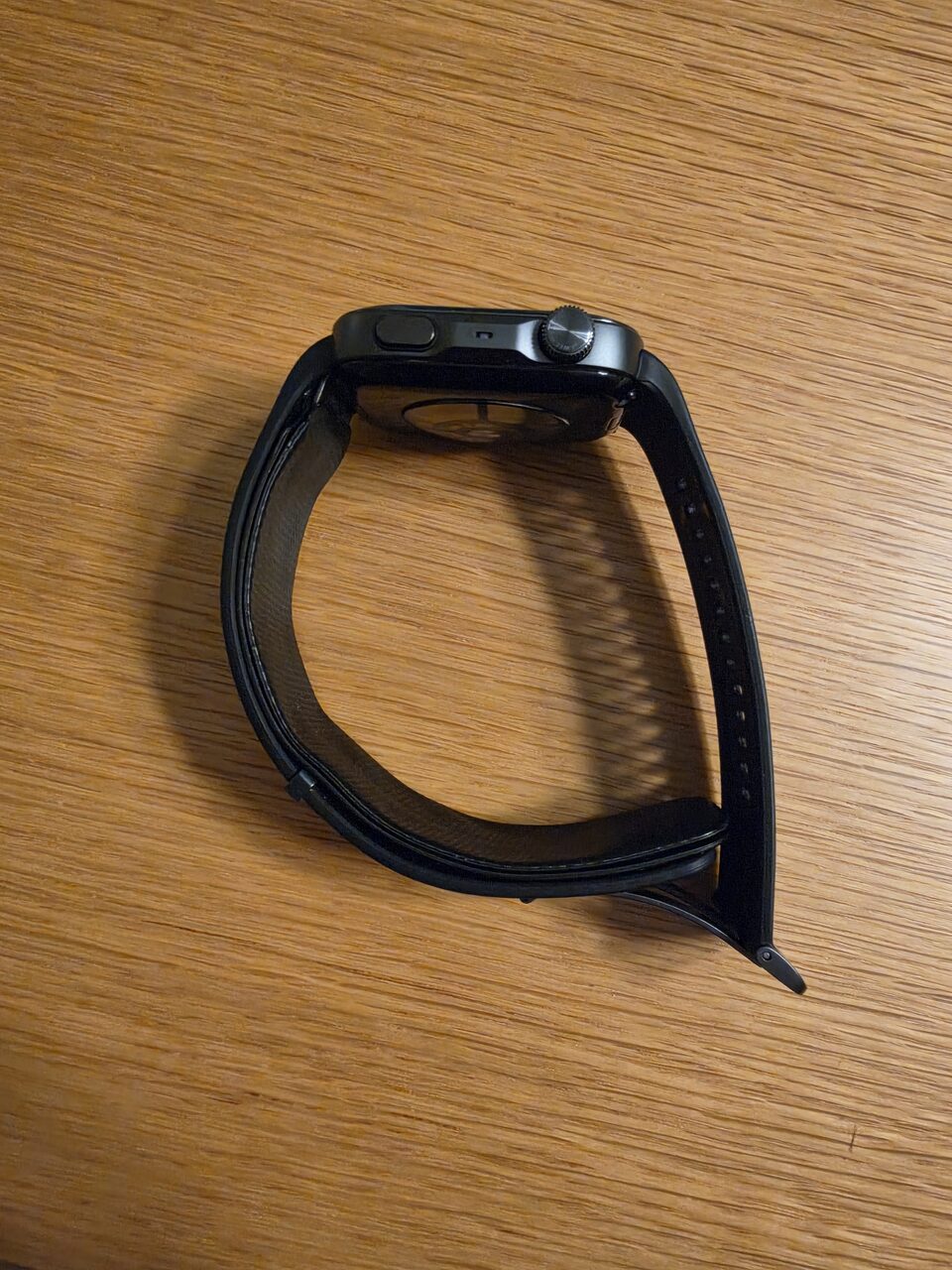
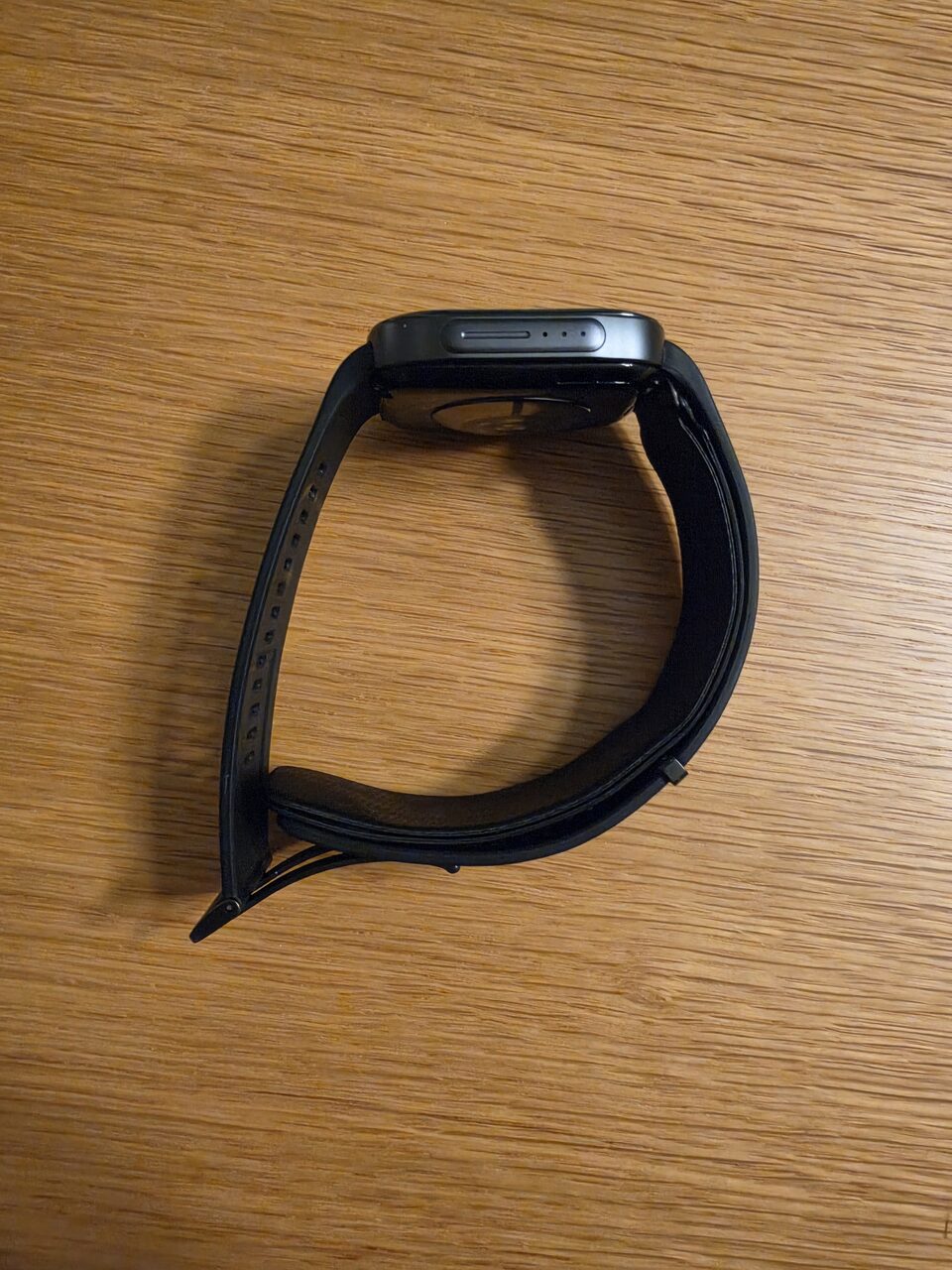
It looks a little thicker than average, but that's down to the strap, which houses the air cushion. On the wrist, though, it's extremely comfortable, even at night. When a measurement starts the cuff inflates and tightens firmly, but if the watch is positioned properly it never hurts. Two straps (M and L) come in the box, along with a paper ruler for measuring your wrist: it's worth using it, because getting the size right matters more here than on any other smartwatch.
A practical tip: the strap isn't very breathable. Rinsing it now and then and letting it dry avoids bad smells.
Display and watch faces
The 1.92-inch AMOLED panel is excellent. With a 3,000-nit peak it's easy to read even in full sun, the colours are vivid and the text is crisp. The screens dedicated to blood pressure, with charts and averages, make good use of the rectangular space.
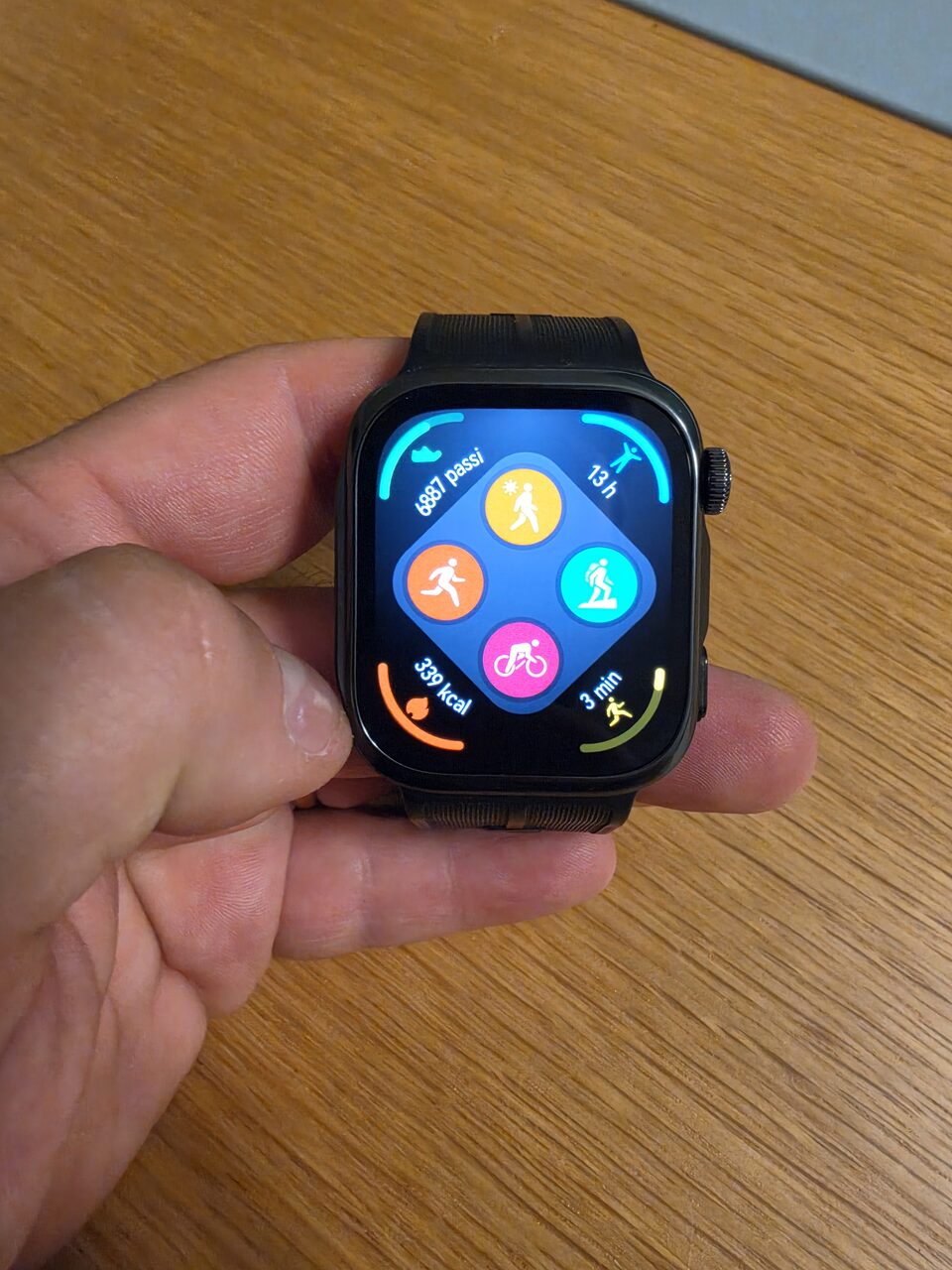
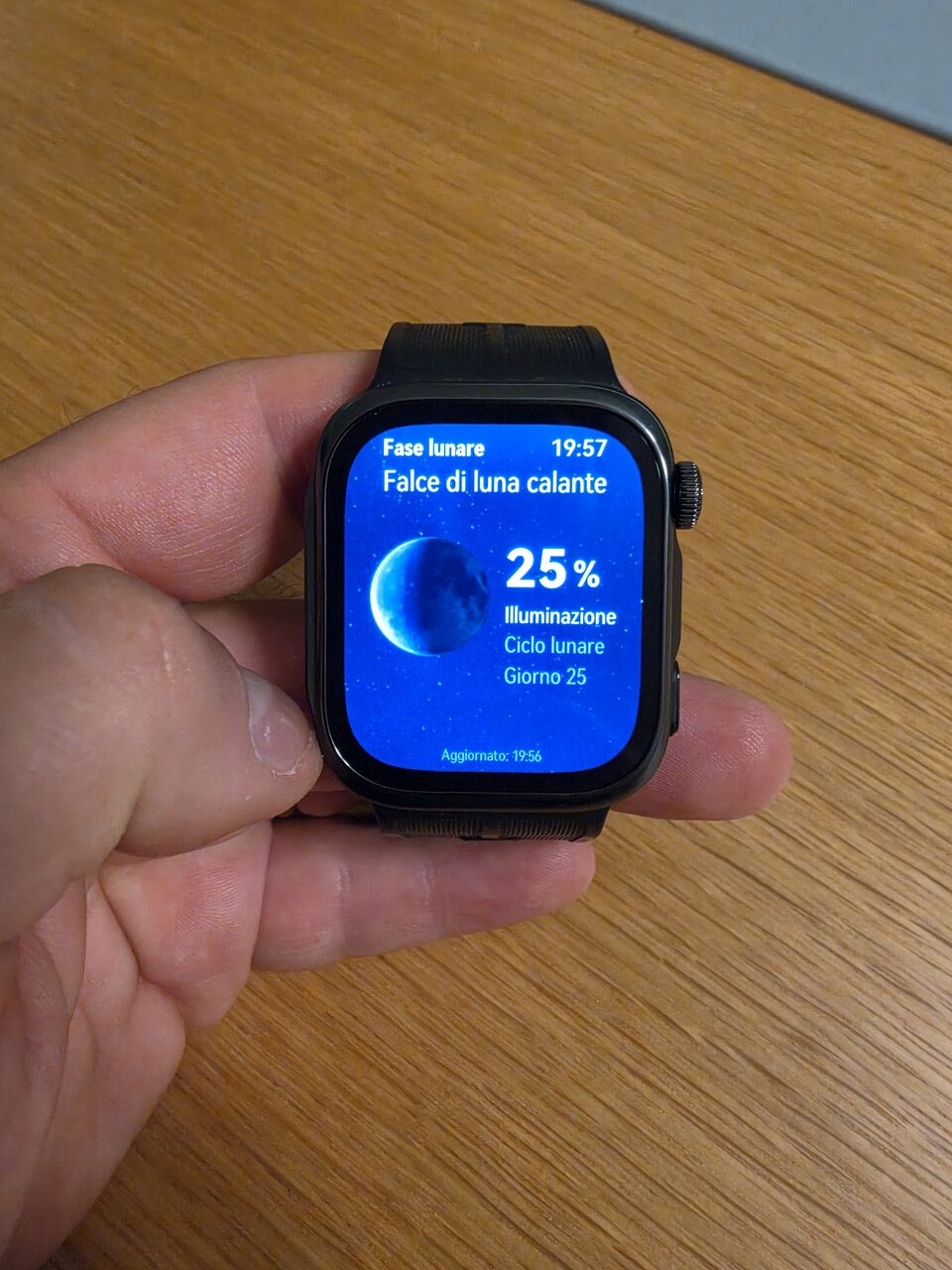
The weak point is the watch faces. The basic free ones are underwhelming, and to get something more eye-catching you have to go to the store, where many are paid. It's no tragedy, but on a €449 watch I expected a better selection.
Blood pressure: how it measures and how accurate it is
This is the reason to buy the D3. There's no sensor estimating pressure from blood flow: there's a micropump that inflates the airbag in the strap and a sensor that reads the artery's oscillations as the air escapes, using the same oscillometric method as upper-arm monitors. That's why it doesn't need calibrating, and why the feature is certified as a medical device in Europe. Huawei has also registered a clinical study following the ISO 81060-2 standard, the one used to validate blood pressure monitors.
For a correct reading you sit down, rest your wrist against your chest at heart level and stay still and quiet for about thirty seconds. You can start it from the menu or, more conveniently, from the programmable button.
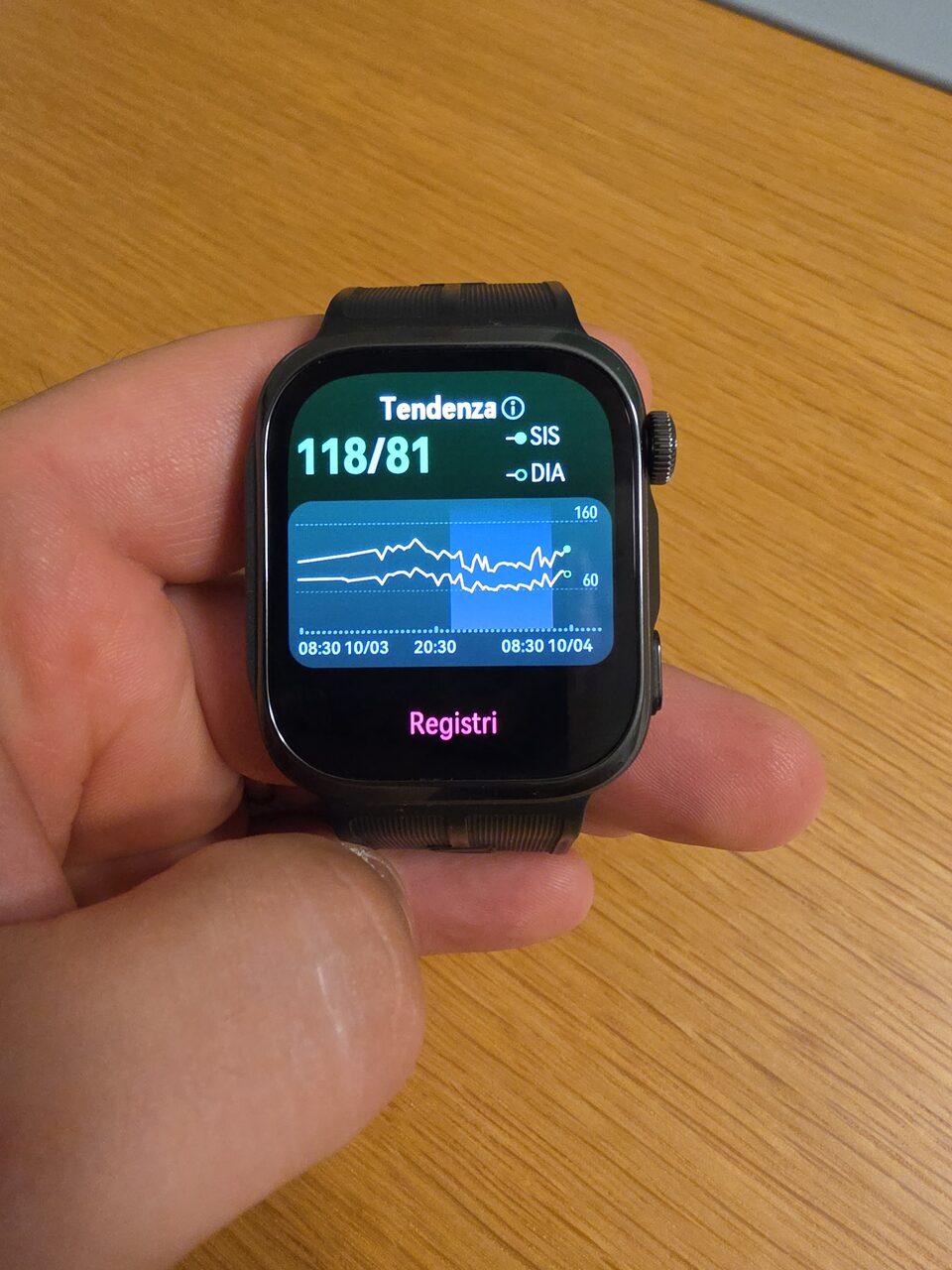
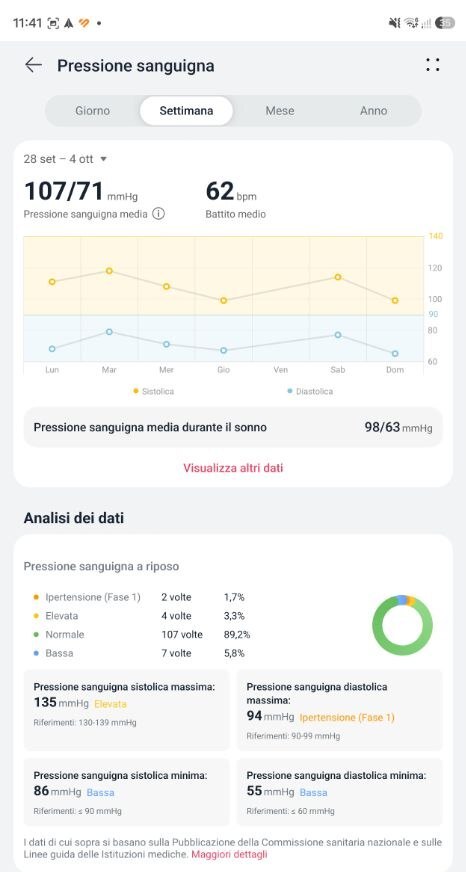
The comparison with my upper-arm Omron, taking readings one after the other, went better than I expected. The diastolic reading is practically identical, while the systolic at the wrist tends to come out a little lower, by a few millimetres of mercury. It's not an isolated case: several independent tests show the same downward gap, sometimes wider than mine. So the D3 is perfectly good for following the trend over time and noticing if something changes, but an abnormal reading should always be rechecked with an upper-arm monitor and, if it keeps happening, with a doctor.
In the week from 28 September to 4 October the app collected 120 resting readings: 107 within the normal range, 4 in the "elevated" band, 2 in stage 1 hypertension and 7 low. The average was 107/71 mmHg with 62 beats per minute.
24-hour blood pressure holter: the best feature
The blood pressure holter, or ABPM, is the feature that justifies the price on its own. You set it up from the watch or the app: by day it measures at regular intervals (every 15 or 30 minutes, your choice), at night it follows the times you gave it.
During the day, when a measurement starts, the watch vibrates and asks you to bring your wrist to your chest. If you're walking or talking at that moment the reading can fail, and there's a detail worth knowing here: on my second holter, on 3 and 4 October, the app reported insufficient valid daytime data and presented the result as a reference only. In other words: on a busy day you have to pay attention to the vibrations and stop for a few seconds.
At night, on the other hand, it's perfect. It doesn't light up the screen, it inflates, measures and deflates in silence. Despite the squeeze on the wrist, it never woke me and didn't disturb my sleep.
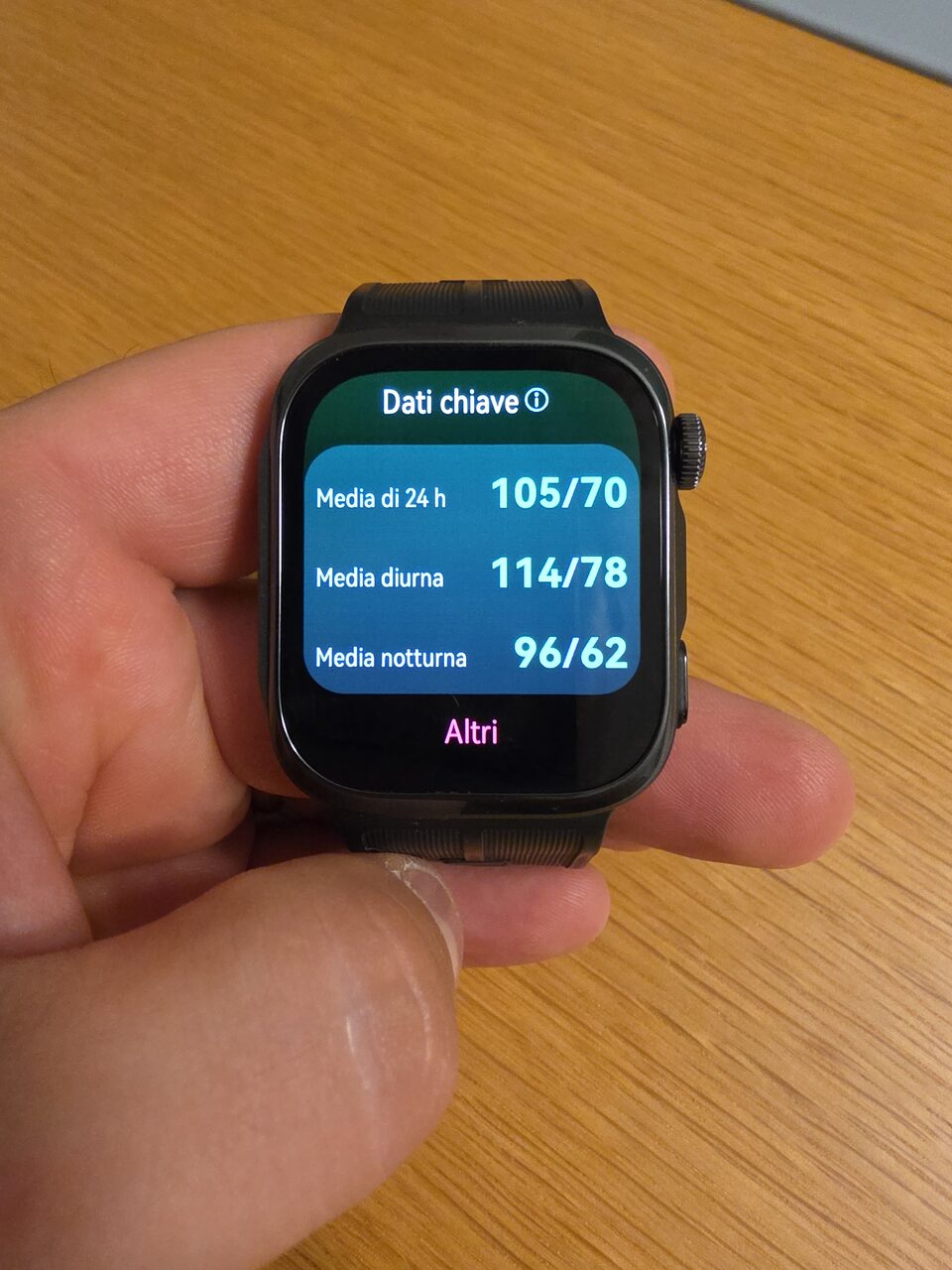
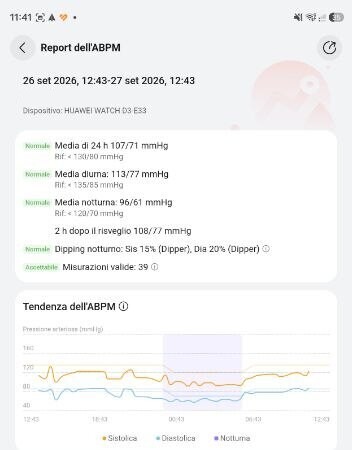
The final report is clear and can be exported for your doctor. Here is my first holter, from 26 to 27 September:
| Period | Average | Readings |
|---|---|---|
| 24 hours | 107/71 mmHg | 39 |
| Day | 113/77 mmHg | 25 |
| Night (23:32-06:27) | 96/61 mmHg | 14 |
| 2 hours after waking | 108/77 mmHg | 3 |
The app also calculates the night-time drop (so-called dipping: 15% for systolic and 20% for diastolic in my case), the morning surge and variability. These are the same parameters as a classic holter, except there's no cuff on your arm with a tube coming out of your sleeve for 24 hours. For anyone who needs to keep an eye on their blood pressure, it's a huge step forward.
Health, sleep and sport
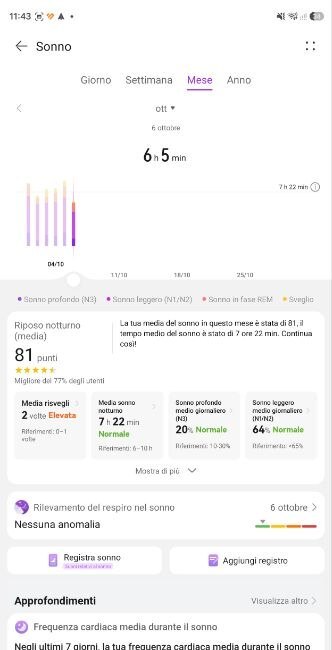
Besides blood pressure, the D3 has everything you'd expect from a health-focused smartwatch: single-lead ECG, arrhythmia analysis from the pulse wave, SpO2, skin temperature, breathing detection during sleep and an estimate of arterial stiffness.
Sleep tracking with TruSleep, step counting and light activities such as walking seemed very accurate to me, in line with what I've seen on high-end sports watches like the Garmins. The dual-band GPS also tracked my walks without any problems.
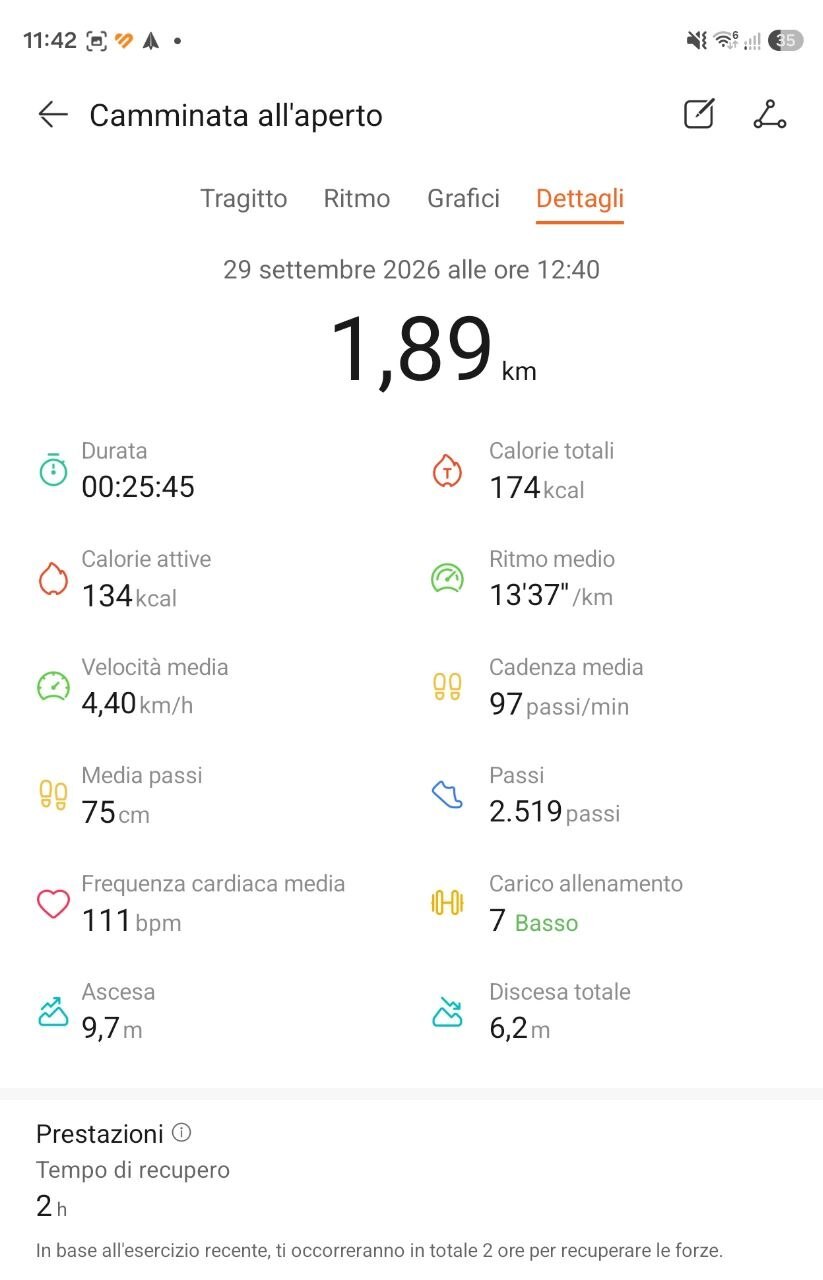
The most interesting new feature for people who exercise is the blood pressure reading before and after a workout. If your pressure is high before you head out, the watch advises you to reduce the intensity. It's not a sports watch for marathon runners, but for anyone who walks, runs or cycles with an eye on their health it's a sensible addition.
Everyday use and notifications
The interface takes five minutes to learn:
- Swipe from top to bottom: quick settings.
- Swipe from bottom to top: notifications, to read and delete if you like.
- Swipe from left to right: widgets.
- Press the crown: the full app menu.
- Lower button: fully programmable, great for starting a workout or an ECG on the fly.
Notifications arrive flawlessly from the phone. With the microphone and speaker you can answer calls from your wrist, there are quick replies and NFC for payments, which in Italy go through Curve Pay: it works, but it isn't as convenient as Google Wallet or Apple Pay. Third-party apps are few: the D3 does its own things well, it isn't a watch to fill with apps.
The Huawei Health app
The initial setup is very quick. The rest of the experience with the app, available for Android and iOS, is less convincing. The home screen is a wall of square boxes, one for every piece of data, and promotions, premium courses and offers on other Huawei products pop up among the data. The information is all there and in depth, too, but you have to hunt for it.
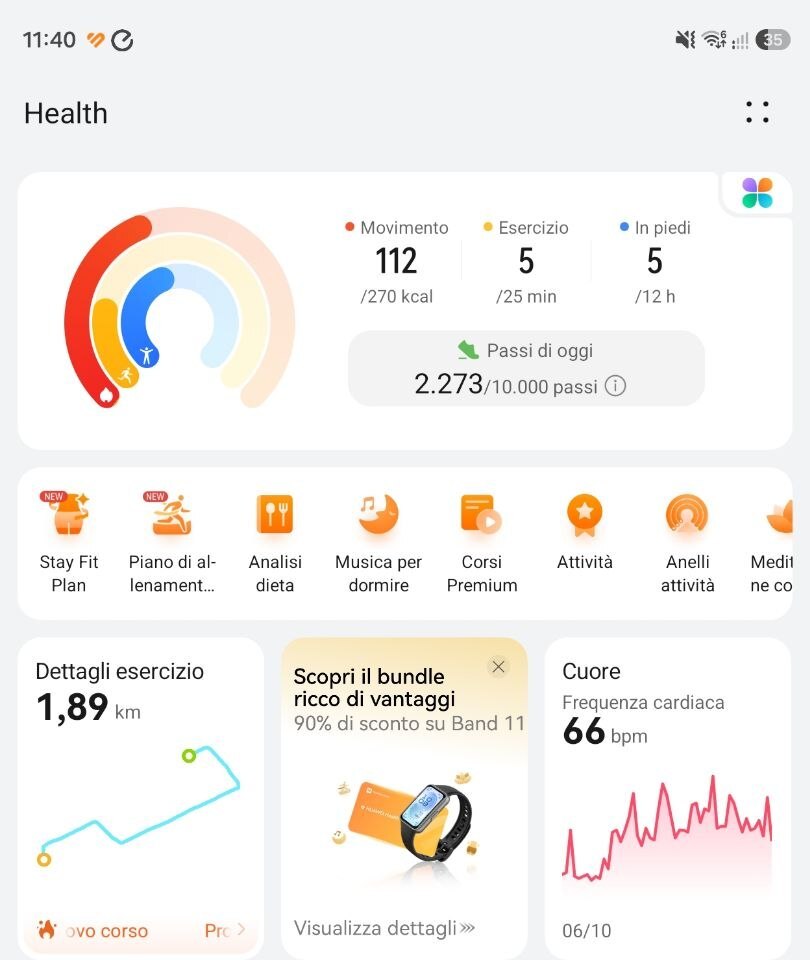
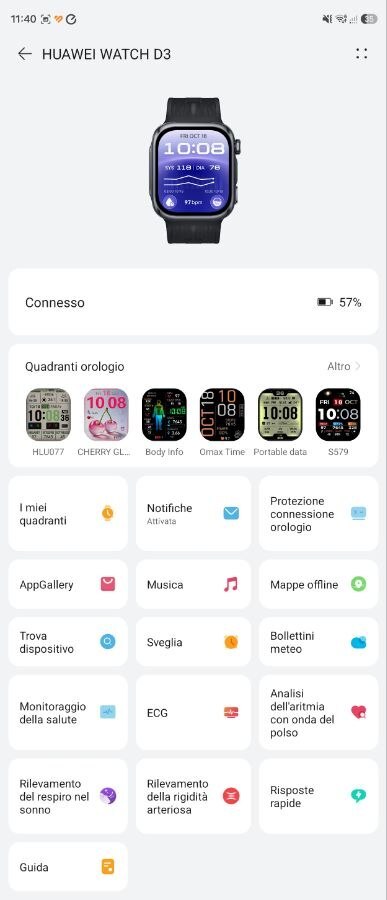
Compared with cleaner apps such as Apple Health, Huawei Health is less intuitive and too dense. A tip: from the "Edit" option at the bottom of the home screen you can remove the cards you don't care about, and things improve a lot.
Android or iPhone?
It works with both, but with differences. On Android the Huawei Health app isn't on the Play Store: you download it from the Huawei website (or from AppGallery) and install it by hand. Once that's done, everything works, quick replies included. On iPhone the app is on the App Store, but some features are more limited, starting with message replies. I used it with an Android phone and had no problems.
Battery and charging
Battery life is excellent for a watch that inflates a pump several times a day: in my use, with a few daily readings, notifications and sleep tracking, I comfortably get between 5 and 7 days. With the 24-hour holter on, consumption goes up a lot and you get 1-2 days, which is normal: it takes dozens of readings in a day.
A full charge takes about 75 minutes with the magnetic dock and the USB-C cable supplied. Mind you, though: charging is proprietary. The D3 doesn't charge on ordinary Qi wireless chargers, so if you want a second dock for the office or for travelling, you have to buy the original Huawei one.
Watch out for water
This is the point to know before buying. Despite the IP68 rating, the box contains a very clear leaflet (the same warnings are on the official page): it must not be used in the shower or for swimming, and must be kept away from saunas and spas.
Washing your hands or getting caught in a bit of rain isn't a problem, but it's best to dry it straight away. Prolonged contact with water or steam can get into the valve that exchanges air with the outside and damage the strap's inflation mechanism, compromising later readings. Anyone used to never taking their watch off will have to change their habits.
The alternatives
| Product | How it measures blood pressure | Worth knowing |
|---|---|---|
| Huawei Watch D3 | Inflatable cuff, CE medical device | The slimmest in the family, 24-hour holter, €449 |
| Huawei Watch D2 | Inflatable cuff, like the D3 | Costs less, but is thicker (13.3 mm) and has a smaller, dimmer screen |
| Samsung Galaxy Watch | Optical estimate | Has to be calibrated every four weeks with an upper-arm monitor |
| Apple Watch | Optical analysis over 30 days | Warns of possible hypertension, but doesn't give values in mmHg |
| Hilo (formerly Aktiia) | Continuous optical bracelet | Not a smartwatch and has to be calibrated with the cuff every month |
Today, if you want a real blood pressure number at the wrist without calibration, the only choice among popular smartwatches is Huawei's Watch D family. If you're after a sportier or lighter watch instead, there's our guide to the best smartwatches, while the Huawei Watch Fit 5 offers the same health platform at a third of the price, without the blood pressure.
Frequently asked questions
Does the Huawei Watch D3 measure blood pressure reliably?
Yes, within the limits of a wrist monitor. It uses a real inflatable cuff with the oscillometric method and is certified as a medical device. In my comparison with an upper-arm Omron the diastolic is almost identical, while the systolic comes out a little lower. It should be used to follow the trend; an abnormal reading should be rechecked with an upper-arm monitor and with your doctor.
Can you shower or swim with the Watch D3?
No. Despite the IP68 rating, Huawei advises against showering, swimming, saunas and spas, because water can get into the air valve and damage the inflation system. Wet hands and rain are fine, but it's best to dry it afterwards.
How long does the battery last with the 24-hour holter?
In normal use you get between 5 and 7 days. With the 24-hour blood pressure holter on, which takes dozens of readings in a day, battery life drops to 1-2 days. A full charge takes about 75 minutes.
Does it work with iPhone?
Yes, with iOS 13 or later and the Huawei Health app from the App Store. Compared with Android some features are more limited, such as message replies. On Android, by contrast, the app has to be downloaded from the Huawei website, because it isn't on the Play Store.
Is the Watch D3 or the Watch D2 better?
The blood pressure measurement is the same. The D3 is 2 mm slimmer, has a bigger screen that's about twice as bright, dual-band GPS, measurement before and after exercise and faster charging. If you already have the D2, it isn't a must-have upgrade; if you're buying today, the D3 is worth the difference.
Which strap should I choose?
Both come in the box: M for wrists from 13 to 16 cm and L from 16.1 to 21 cm. Use the ruler included, because the wrong size skews the readings. Below 13 or above 21 cm the D3 isn't suitable.
How much does it cost and where can you buy it?
The list price is 449 euros. You'll find it on the Huawei Store, on Amazon, in electronics chains and in a first selection of pharmacies, which Huawei wants to expand over the next few years.
Does it replace the doctor's blood pressure monitor?
No. It's an excellent tool for knowing your own trend and bringing your doctor weeks of data instead of a single reading in the surgery, but diagnosis and treatment remain the doctor's job.
Verdict
The Huawei Watch D3 is first and foremost an excellent tool for cardiovascular health, and only then a full-featured smartwatch. It really does measure blood pressure, with values close to those of an upper-arm monitor, and the 24-hour holter is a feature no other popular watch offers: at night it works in silence and in the morning hands you a report you can take to your doctor. Compared with the D2 it's slimmer, more comfortable and has a decidedly better screen.
In these ten days I wore it alongside the Garmin Cirqa on the other wrist, and the pair works: I leave blood pressure to the D3 and continuous sleep and recovery monitoring to the Cirqa.
There are compromises: no showering or swimming, a crowded app with too many promotions, modest free watch faces and proprietary charging. And €449 is a lot for anyone who just wants to count steps.
Who it's for: anyone who needs or wants to keep their blood pressure under control, anyone planning a holter who'd rather do it without a cuff on their arm, anyone who wants to share concrete data with their doctor. Who it's not for: anyone who swims or never wants to take their watch off, anyone looking for a sports watch for intense training or an ecosystem rich in apps.
Huawei Watch D3
Translated from the Italian original. Read in Italian


