
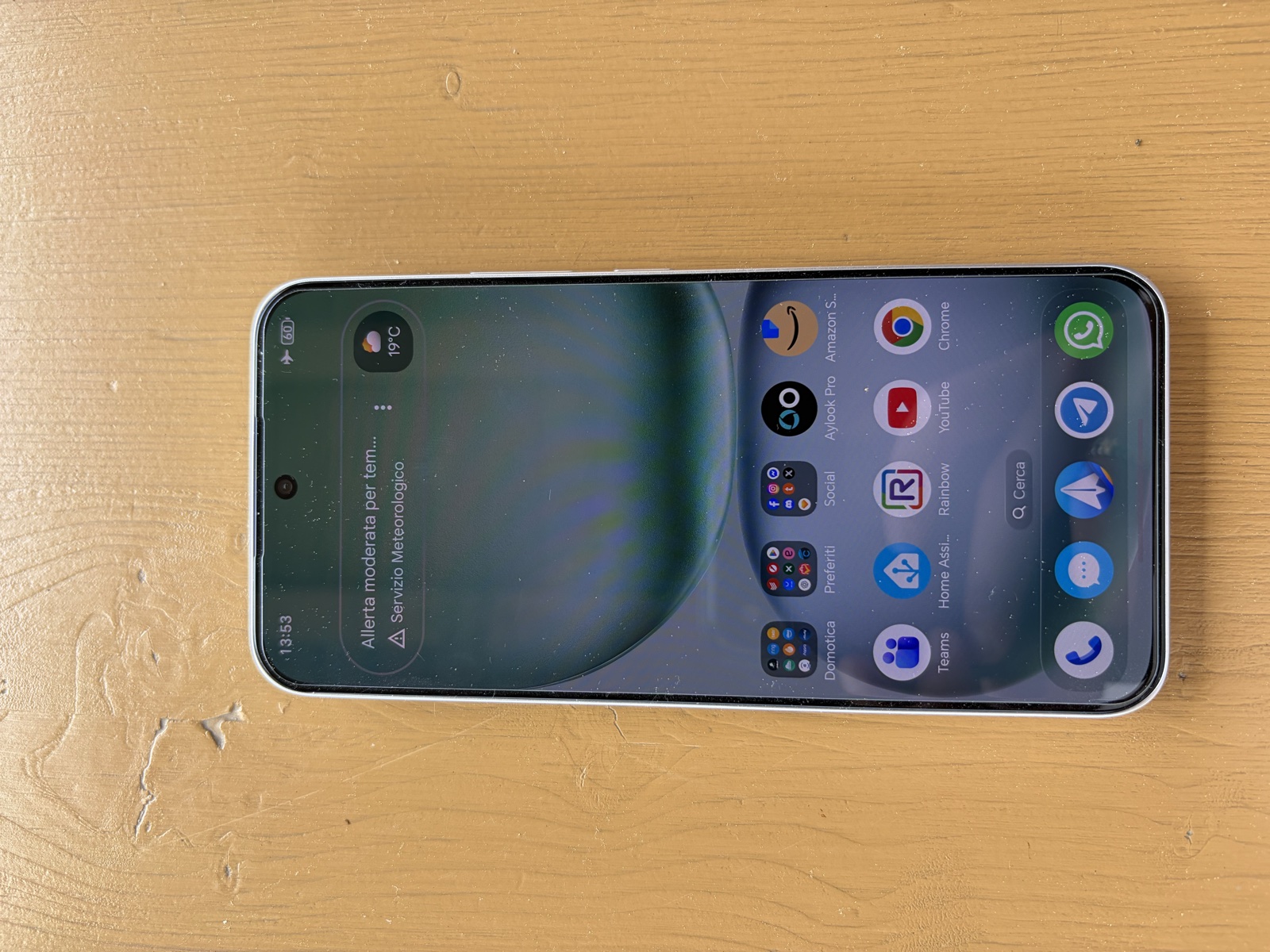
The Honor 400 arrived on the Italian market on 22 May 2025 as a premium mid-ranger with three key selling points: a 200 MP main camera with OIS, an AMOLED display with 5000 nits of peak brightness and one of the richest AI packages in its class. I had the chance to use the device day to day for several weeks and I want to share my full experience: what it really offers, where it makes a difference and where it makes compromises.
Overview
The Honor 400 sits in the premium mid-range segment between 450 and 500 euros, an increasingly crowded part of the market where every manufacturer has to find a strong argument to stand out. Honor has chosen three angles of attack: a 200 MP main camera, a rarity at this price; a display with a claimed peak brightness of 5000 nits (a category record at launch); and a series of AI features developed with Google Cloud, in particular photo-to-video conversion.On the processor front, there was no attempt to set records: the Snapdragon 7 Gen 3 is a solid mid-range chip but not a top-tier one. The build uses a polycarbonate frame with a glass back, a choice that kept weight (184 g) and price down, but the look remains less premium than the metal-and-glass of flagships. Where Honor has raised the stakes is long-term software support: 6 years of guaranteed updates, a promise hard to find in this segment.
Design and build: light and compact
The dimensions (156.5 x 74.6 x 7.3 mm) and a weight of just 184 grams make the Honor 400 one of the most comfortable smartphones in its class to hold, in a landscape where most devices now top 200 grams. The frame is polycarbonate with a matte finish and the back is glass, available in Lunar Grey, Desert Gold and Midnight Black.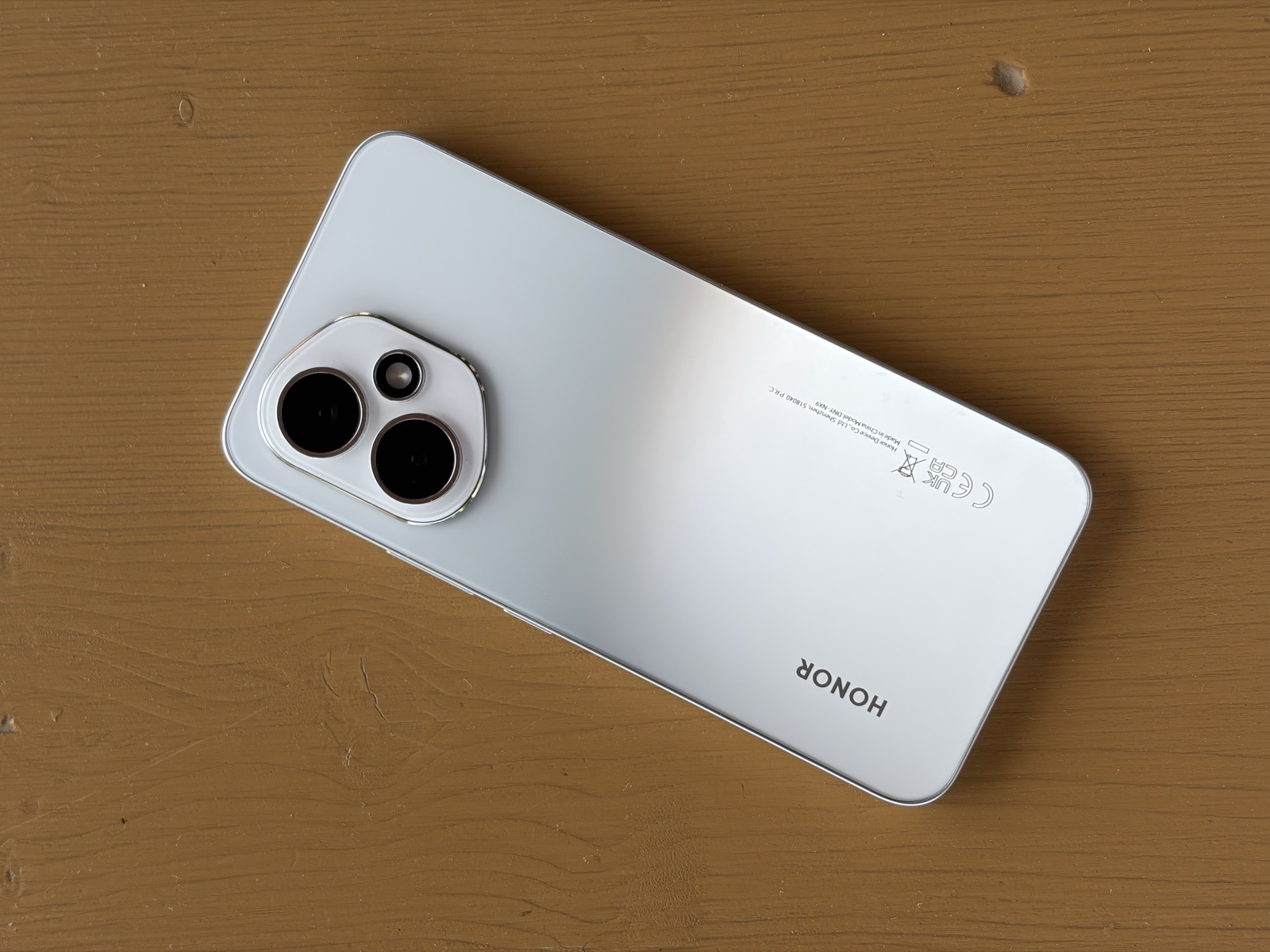
The circular camera module in the middle of the back is one of the distinctive elements of the company’s 2025-2026 design. The volume and power buttons are on the right edge, easy to reach even with one hand thanks to the frame’s narrow width.
Display: the real selling point
The 6.55-inch AMOLED panel with a resolution of 2736 x 1264 pixels (460 ppi) and a 120 Hz refresh rate is one of the best in its class. The figure that makes headlines, though, is the claimed peak brightness: 5000 nits in HDR. I was able to confirm excellent behaviour in direct sunlight first-hand, with always excellent legibility and the vivid colour saturation typical of AMOLEDs.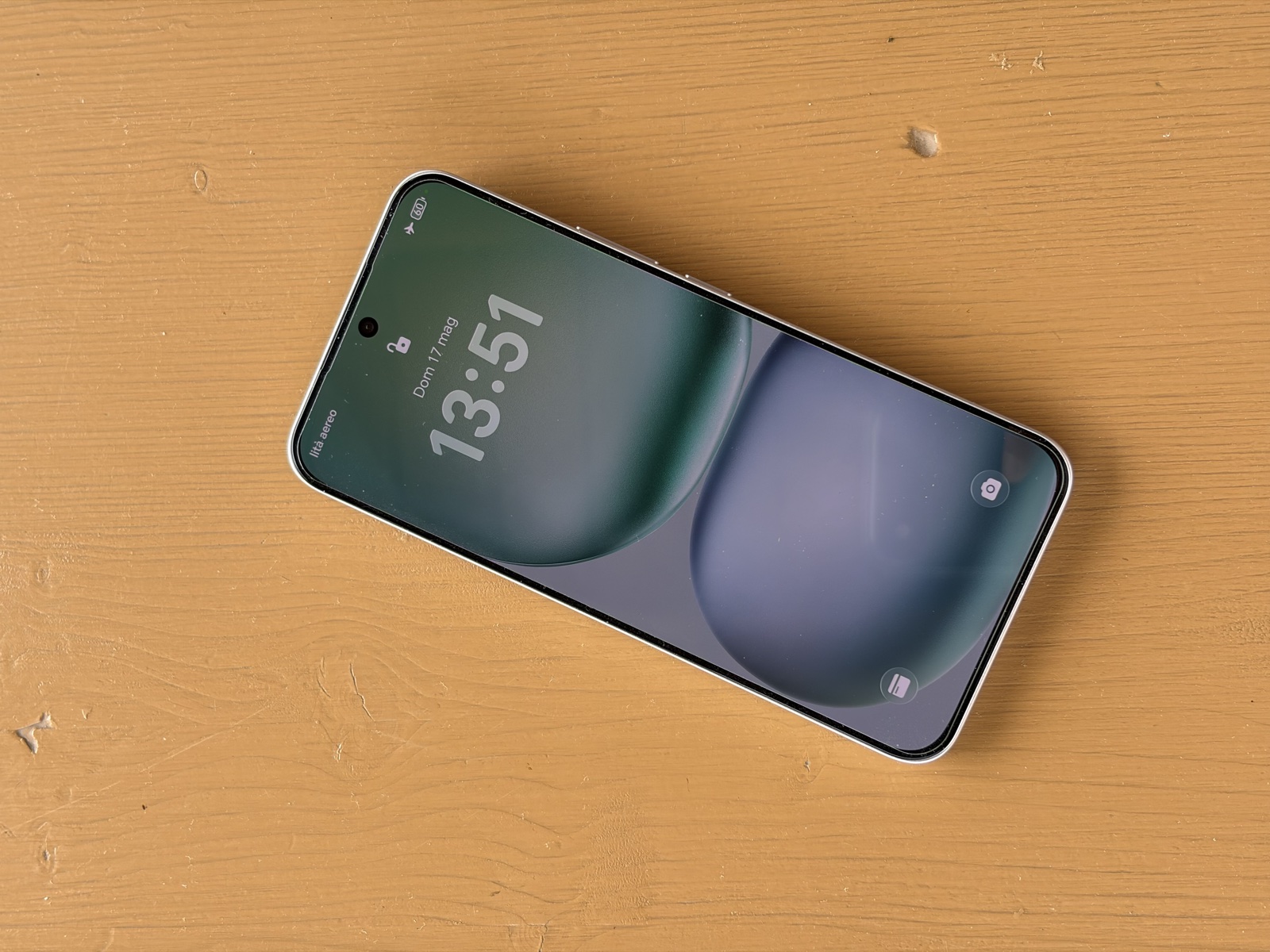
The only criticism I’d make concerns the factory calibration, slightly off-balance on saturated colours. Anyone after colour reproduction faithful to the sRGB standard can correct it manually in the display settings.
200 MP camera: the ace up its sleeve
The main sensor is the 200 MP Samsung ISOCELL HP3, with an f/1.9 aperture, a 1/1.4" size and OIS optical stabilisation. Pixel binning normally brings shots down to 12.5 MP to improve low-light performance and reduce file sizes, but users can enable full-resolution mode for shots where detail matters.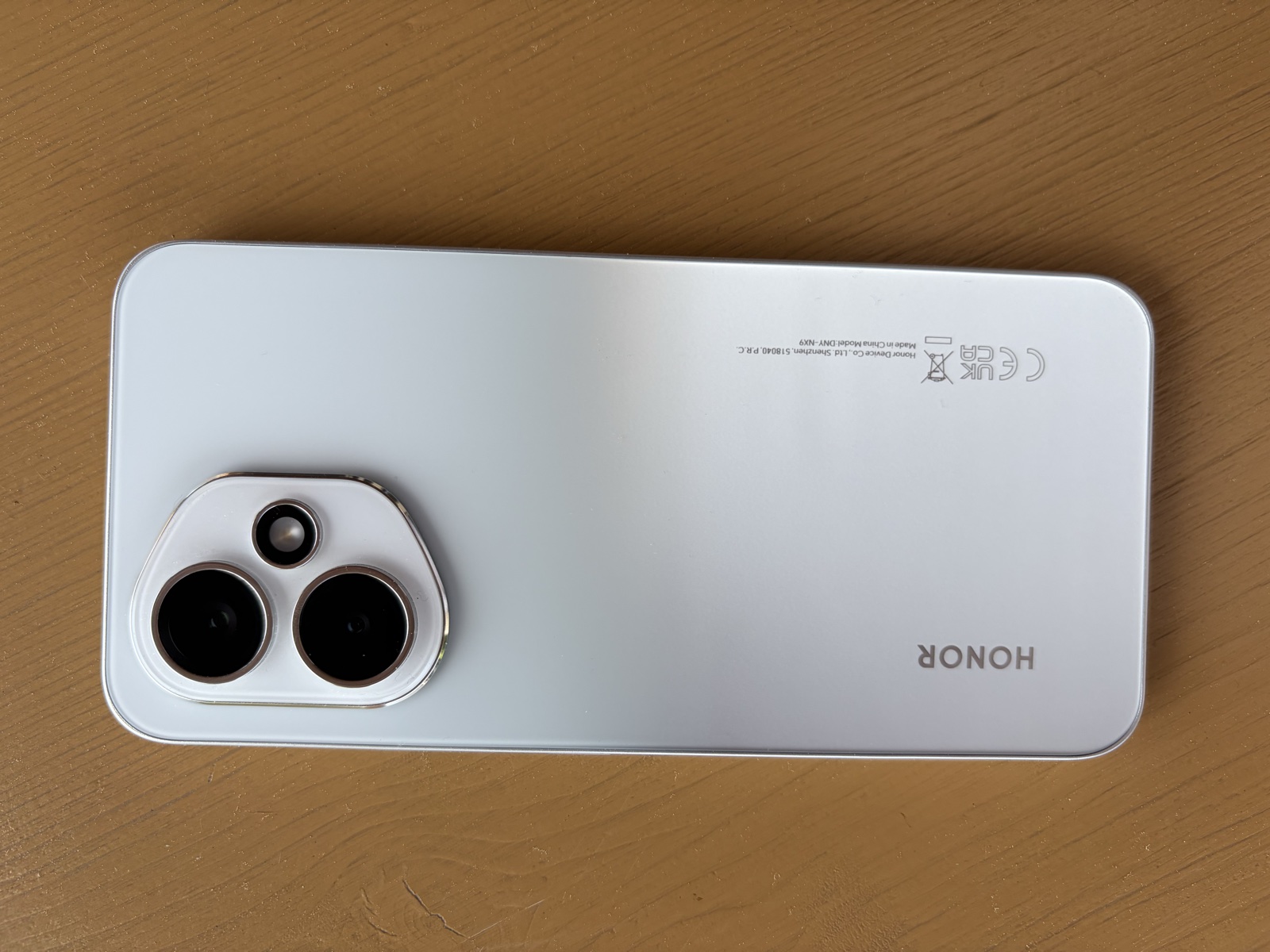
The 12 MP f/2.2 ultrawide with a 112° field of view does its job well in bright conditions and includes macro mode. In low light, though, I noticed obvious noise and loss of detail: it’s the typical mid-range compromise, where the only sensor truly optimised for low light is the main one.
The 50 MP f/2.0 front camera is above average: sharp selfies, balanced exposure and good handling of skin tones. It’s a setup made for those who post regularly on social media.
Performance: is the Snapdragon 7 Gen 3 enough?
The chosen SoC is the Qualcomm Snapdragon 7 Gen 3 on 4 nm: octa-core with a peak frequency of 2.63 GHz and an Adreno 720 GPU. RAM is LPDDR5 (8 or 12 GB depending on the version), storage is UFS 3.1 (256 or 512 GB, not expandable). The AnTuTu score I measured is around 855,000 points: a solid figure for its class, but about 40% lower than flagships with the Snapdragon 8 Gen 3 or Dimensity 9300, which top 1.5 million.In everyday use the chip shows no hesitation: social apps, streaming, browsing, heavy multitasking and gaming at medium settings all run smoothly. Genshin Impact and Wuthering Waves at medium settings remain playable, while at high settings frame rates drop and thermal throttling becomes visible in extended tests. It’s a chip designed for typical users, not hardcore gamers.
Battery and charging: endurance is the strong point
The battery is a 5300 mAh silicon-carbon cell: the same technology that lets a phone keep high capacity in a slim body, and the reason a 7.3 mm phone can pack marathon battery life. Honor claims 1200 charge cycles while retaining 80% of the original capacity, equivalent to about 4 years of daily use.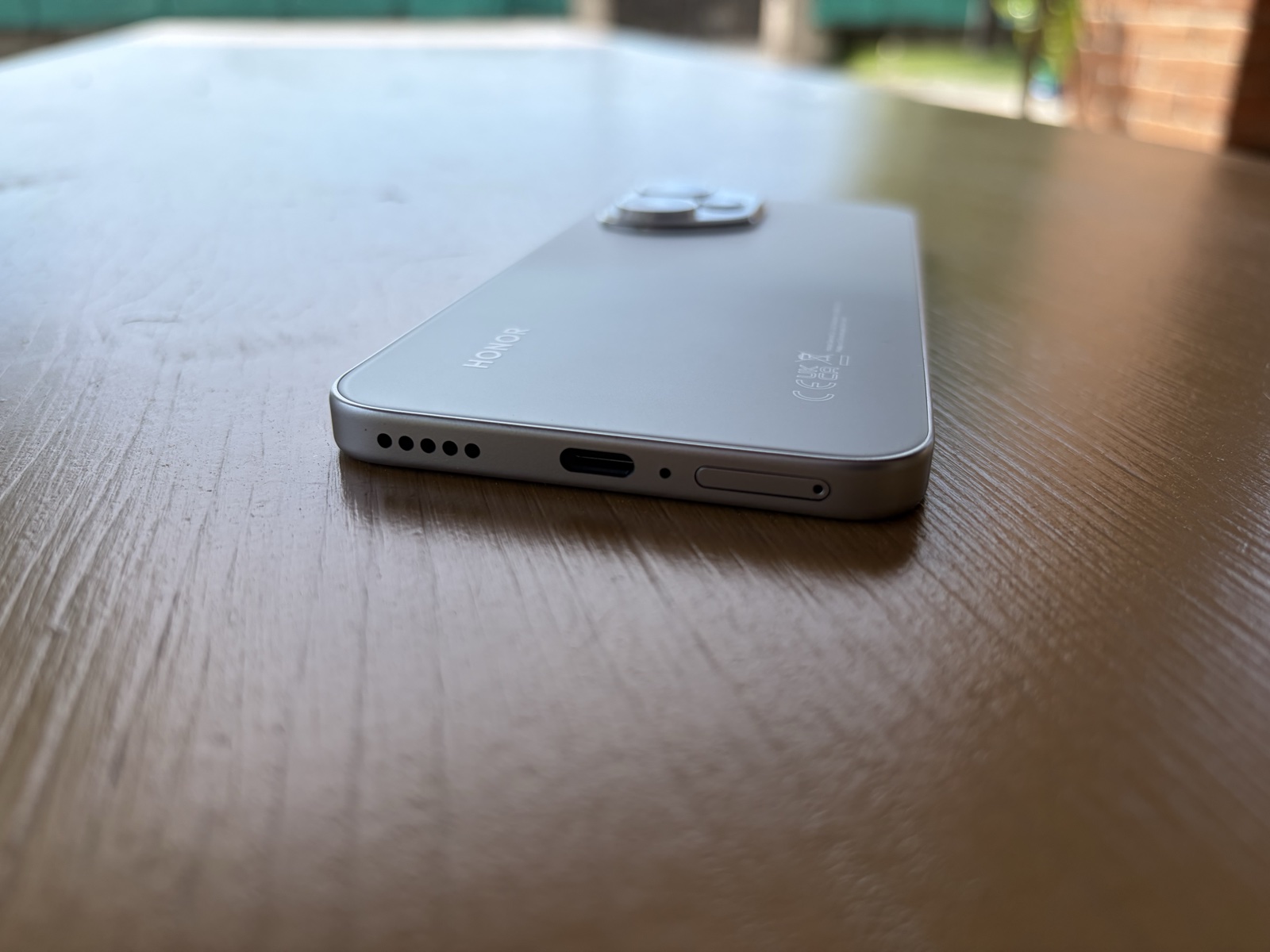
Wireless charging is missing entirely, one of the most keenly felt differences from the Pro model. For those who want it, Honor offers the 400 Pro with 50 W wireless charging and 100 W wired charging, but at a decidedly higher price.
AI and MagicOS 9: integration more than marketing
The Honor 400 ships with MagicOS 9 based on Android 15. The company has invested significantly in AI features, some developed in collaboration with Google Cloud:- AI Image to Video: built into the Gallery app, it turns a photo into a 5-second MP4 clip using Google's Veo 2 generative model. The feature is free with a cap of 10 uses a day for the first 2 months after activation, then through a paid plan.
- Magic Portal 2.0: drag an item on the screen (text, image, address) towards the edge and the system suggests relevant apps to drop it into (maps, translator, social).
- AI Eraser: removes objects or people from photos, much like Google's Magic Eraser.
- Circle & Glide: contextual search by circling an item on the screen.
- AI Deepfake Detection: warns you during video calls when the other person's face appears to be generated or altered.
- Real-time translation and voice transcription built into calls and messages.
- Portrait Snap and Film Simulation in the camera to simulate depth of field and cinematic looks.
How it stacks up against the competition
At its launch price of €499.90 the Honor 400 competes directly with:- Samsung Galaxy A56 (~€480): ahead on brand, length of updates (6 years here too) and One UI; behind on display brightness, main camera megapixels and charging speed.
- Google Pixel 9a (~€549): ahead on photo post-processing, the Tensor G4 and native Google AI integration; behind on display brightness, charging (45 W against 66 W) and main sensor size.
- Xiaomi 14T (~€499): ahead on processor (Dimensity 8300 Ultra) and a dedicated telephoto lens; behind on software (HyperOS is heavier) and display brightness.
- Honor 200 (~€225 today): the predecessor keeps a dedicated telephoto lens that the 400 has lost, and at this price it remains a benchmark for value for money if you don't care about the new AI features.
Who the Honor 400 is for
- Anyone after an extremely bright display, excellent outdoors in the sun.
- Anyone who wants a versatile camera in full light with OIS and a 2x zoom that's usable without loss of quality.
- Anyone who wants a day and a half of battery life and fast charging without compromise.
- Anyone who keeps their phone for 4-5 years: 6 years of updates is a rare guarantee in this segment.
- Anyone who prefers a compact, light smartphone (184 g) to 220 g bricks.
- Anyone curious about well-integrated AI features, in particular Magic Portal and AI Image to Video.
Who it's NOT for
- Anyone who does photography with heavy zoom: without a dedicated telephoto lens and with a weak low-light ultrawide, optical versatility is limited.
- Anyone who plays demanding games at high settings: the Snapdragon 7 Gen 3 shows throttling in prolonged sessions.
- Anyone who wants premium materials to the touch: you can feel the plastic frame.
- Anyone who makes wireless charging a habit: it's absent here.
- Anyone who wants top marks in everything: for that there's the 400 Pro or a real flagship, at twice the price.
The verdict
The Honor 400 is a premium mid-ranger that's convincing on the points that matter to the average user: a class-leading display, an excellent main camera in full light, battery life and charging at the top of the segment, and long software support. The compromises are the predictable ones at this price: no telephoto lens, no wireless charging, plastic instead of glass, an ultrawide that struggles at night.After weeks of intensive use I’d give it 8/10: it’s not a perfect phone, but it does almost everything well and some things genuinely better than its rivals. Honor has found an effective balance between solid hardware, long-supported software and AI features that are usable day to day, without chasing benchmark records that would have been out of reach at this price anyway.
If you’re looking for a phone that will stay with you for years with a superb display, a good camera and zero battery anxiety, the Honor 400 is a solid choice. If, however, heavy-zoom photography, top-tier gaming or premium materials are your priority, you’re better off looking elsewhere or at the Pro models.
PROS
- AMOLED display with 5000 nits peak brightness, a category record
- 200 MP main camera with OIS, excellent quality in full light
- Battery life of over 7 hours of screen-on time, a day and a half of real-world use
- 66 W fast charging: 0-44% in 15 minutes
- 6 years of guaranteed software updates
- Compact and light (184 g, 7.3 mm)
- Well-integrated AI features (Magic Portal, AI Image to Video)
- IP65/IP66 rating
- 3840 Hz PWM dimming, great for anyone sensitive to flicker
CONS
- No dedicated telephoto lens (the 200 MP sensor only does digital cropping)
- Weak ultrawide in low light
- No wireless charging
- No charger in the box
- Polycarbonate frame (glass back), a less premium look than flagships
- The Snapdragon 7 Gen 3 shows throttling in prolonged heavy gaming
Full technical specifications
| Feature | Detail |
|---|---|
| Display | 6.55" AMOLED, 2736x1264, 460 ppi, 120 Hz, 5000 nits peak, PWM 3840 Hz, HDR |
| Processor | Qualcomm Snapdragon 7 Gen 3 (4 nm), octa-core 2.63 GHz, Adreno 720 GPU |
| RAM | 8 / 12 GB LPDDR5 |
| Storage | 256 / 512 GB UFS 3.1, not expandable |
| Main camera | 200 MP Samsung ISOCELL HP3, f/1.9, 1/1.4", PDAF, OIS |
| Ultrawide | 12 MP, f/2.2, 112° FOV, AF, macro mode |
| Selfie | 50 MP, f/2.0 |
| Telephoto | NO (2x zoom from a crop of the main sensor, AI Super Zoom 30x) |
| Battery | 5300 mAh silicon-carbon, 1200 cycles guaranteed |
| Charging | 66 W wired HONOR SuperCharge (44% in 15 min, 100% in 46 min); NO wireless |
| Charger | Not included in the box |
| Operating system | MagicOS 9 on Android 15, 6 years of guaranteed updates |
| AI features | AI Image to Video (Google Cloud), Magic Portal 2.0, AI Eraser, Circle & Glide, Deepfake Detection, real-time translation and transcription |
| Dimensions | 156.5 x 74.6 x 7.3 mm |
| Weight | 184 g |
| Certifications | IP65 / IP66, SGS 5-star Drop Resistance |
| Connectivity | Dual SIM 5G, Wi-Fi 6, Bluetooth 5.4, NFC, USB-C 2.0 |
| Security | Optical under-display fingerprint reader, 2D face recognition |
| Colours | Lunar Grey, Desert Gold, Midnight Black |
| Launch price | €499.90 (8/256 GB) — €549.90 (8/512 GB) |
| Launch date | 22 May 2025 |
Technical deep dive
For readers interested in the engineering details behind Honor's choices, we've gathered here the most relevant technical information drawn from the manufacturer's official specifications and the components' public datasheets.Samsung ISOCELL HP3 main sensor
The HP3 is a 1/1.4" CMOS sensor with 0.56 µm pixels in native 200 MP mode. It implements Tetra2pixel binning: in standard mode it combines 4 adjacent pixels into one (4-in-1) to output 50 MP with equivalent 1.12 µm pixels, while in low light it switches to 16-in-1 binning to output 12.5 MP with 2.24 µm pixels and reduce noise. It's the same sensor that equips several premium mid-rangers from 2024-2025 and represents one of the most aggressive photographic choices available under 500 euros.Silicon-carbon battery
The 5300 mAh cell uses a silicon-carbon anode instead of traditional graphite. The practical difference is a volumetric energy density about 10-15% higher: the result is a high capacity in a slim body (7.3 mm). Honor claims an 80% retention of original capacity after 1200 full charge cycles, equivalent to about 4 years of daily use before seeing significant degradation. It's a technology the industry is gradually adopting in 2024-2026 and one that Honor has brought en masse to the mid-range.Display: high-frequency PWM
PWM (Pulse Width Modulation) dimming on the Honor 400's AMOLED works at 3840 Hz, a high value compared with the 240-480 Hz standard common in cheaper panels. This choice drastically reduces the flicker perceptible at low brightness, a known issue for people who suffer from eye strain or migraines from OLED screens during evening reading. The maximum declared refresh rate is 120 Hz; it isn't an LTPO panel with adaptive refresh, but it still supports intermediate levels managed by the operating system.Snapdragon 7 Gen 3: architecture
The Qualcomm Snapdragon 7 Gen 3 SoC is made on Samsung's 4 nm node and uses a 1 + 3 + 4 architecture: one prime Cortex-A715 core at 2.63 GHz, three performance Cortex-A715 cores at 2.4 GHz and four efficiency Cortex-A510 cores at 1.8 GHz. The GPU is the Adreno 720. It's the same silicon used in other mid-rangers from 2024-2025 and is a choice geared towards balanced consumption rather than peak performance.Honor + Google Cloud partnership for AI
The AI Image to Video feature was developed in collaboration with Google Cloud and uses Google's Veo 2 generative model. It's built natively into the phone's Gallery app and produces 5-second MP4 clips from a static portrait or landscape photo. Honor announced the partnership at IFA 2024 and the Honor 400 is one of the first smartphones in the series to integrate it natively. Video generation requires an Internet connection and is subject to a cap of 10 free generations a day for the first 2 months after the device is activated, after which the feature requires a paid plan.Connectivity
The Honor 400 supports Wi-Fi 6 (not Wi-Fi 6E or Wi-Fi 7), Bluetooth 5.4 with LDAC, AAC and LC3 codecs, NFC for contactless payments and USB-C 2.0 (not 3.x, so data transfer throughput is limited). It's dual SIM (1 nano-SIM + 1 eSIM in international versions) with sub-6 GHz 5G support on both SIMs. There's no 3.5 mm audio jack and no support for dual eSIMs.Translated from the Italian original. Read in Italian


